Fire engulfs sacred temple after tourist's incense accident
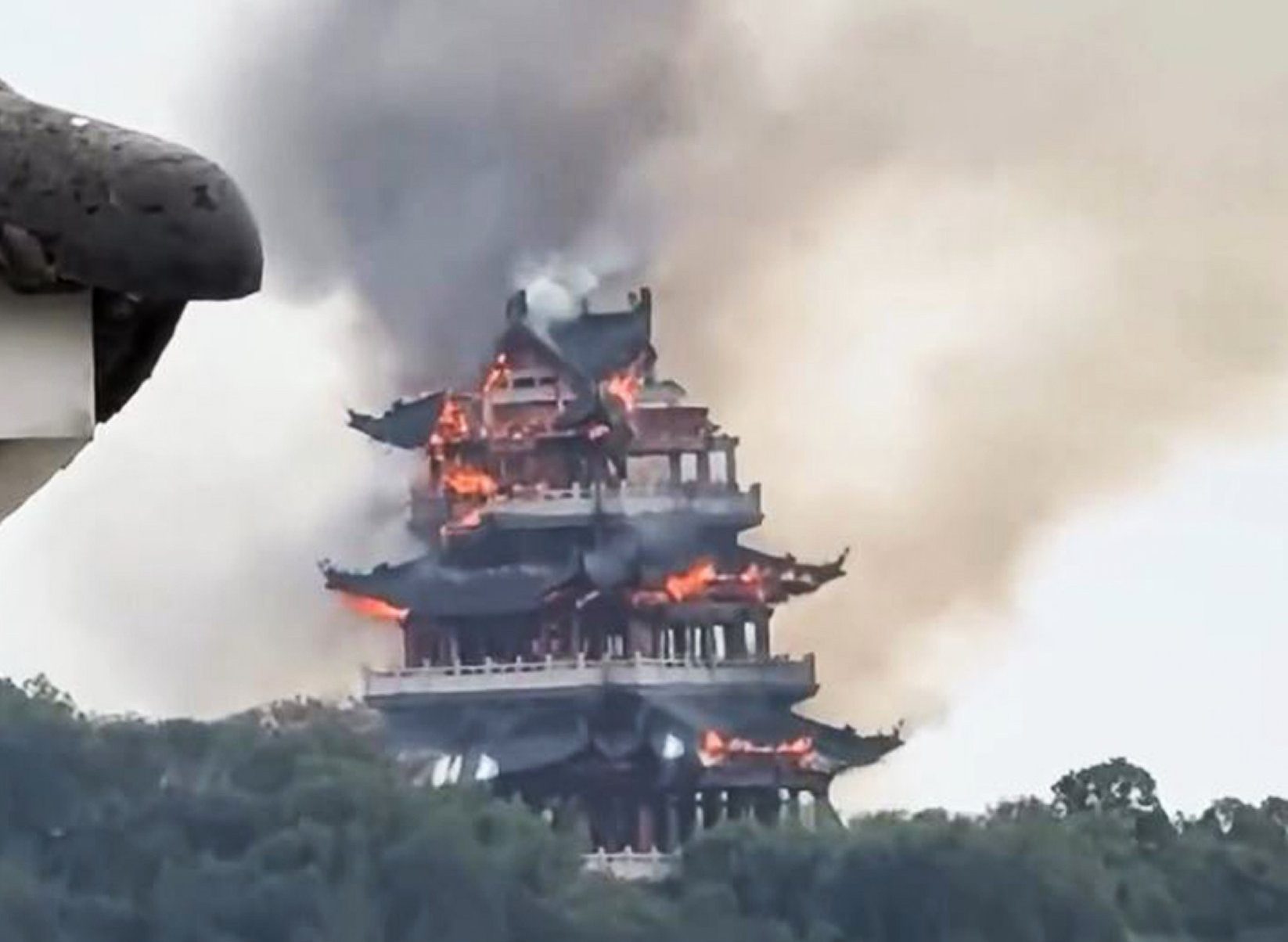
A tragic incident occurred at a sacred temple complex when a visitor's improper use of incense and candles led to the destruction of a pavilion. The fire broke out at Wenchang Pavilion on Fenghuang Mountain in Zhangjiagang, Jiangsu province, China, on November 12th. Dramatic footage captured the three-storey structure engulfed in flames, with thick smoke rising to the sky as pieces of the roof fell from the building.
Authorities confirmed that there were no casualties, and the blaze did not spread to any surrounding forest areas. Investigators revealed that preliminary findings indicated the fire was caused by a visitor's incorrect use of incense and candles.
The pavilion, which was built in October 2009, was stated to contain no cultural relics. Officials emphasized that all buildings within the temple complex are modern constructions without any ancient architectural remains.
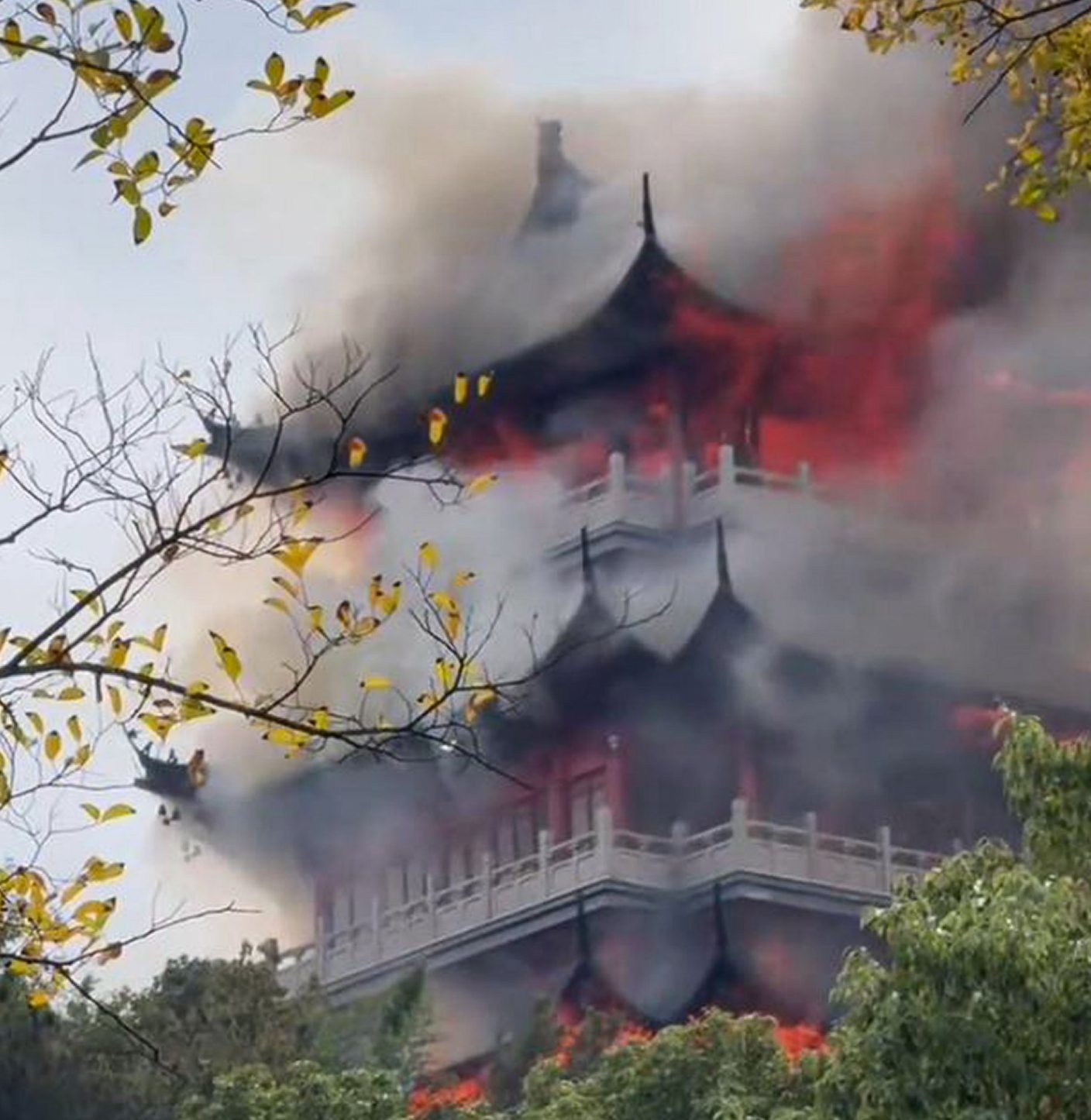
According to official notices, the pavilion was commissioned in 2008 and constructed using a reinforced concrete frame, completing its construction in 2009. The structure was managed by the neighboring Yongqing Temple after its completion. Historical records mention that the original Yongqing Temple dates back many centuries, although the current buildings were rebuilt in the 1990s.
Local authorities mentioned that further actions would be taken based on the investigation results. They also highlighted that safety measures would be strengthened to reduce fire risks.
In 2023, another alarming event took place when flames consumed a centuries-old temple in China, nearly destroying the historic building. Firefighters rushed to the Shandan Great Buddha Temple in Gansu province’s Shandan County as a giant Buddha statue was surrounded by flames. After the fire was extinguished, the Buddha statue appeared to remain partially intact, but several temple structures were destroyed.
Local media reports indicated that the statue was built in 1998 as a replica of an original one, which dated back to around 425 AD. This original statue was damaged during the Cultural Revolution.
This incident highlights the vulnerability of historical sites and the need for increased awareness and preventive measures to protect such heritage. It also underscores the importance of proper management and safety protocols in religious and cultural spaces.
In light of these events, it is crucial for visitors to adhere to guidelines and respect the sanctity of such places. Authorities must continue to implement and enforce strict safety regulations to prevent future incidents. The preservation of historical and cultural landmarks is essential for maintaining the rich heritage of a region.
By learning from past mistakes and implementing effective strategies, we can ensure that such tragedies do not occur again. It is a collective responsibility to safeguard our shared history and protect the legacy of our ancestors for future generations.
