JLR Suffers Big Losses as Production Recovers from Cyber Attack
Financial Impact of Cyber Attack on Jaguar Land Rover
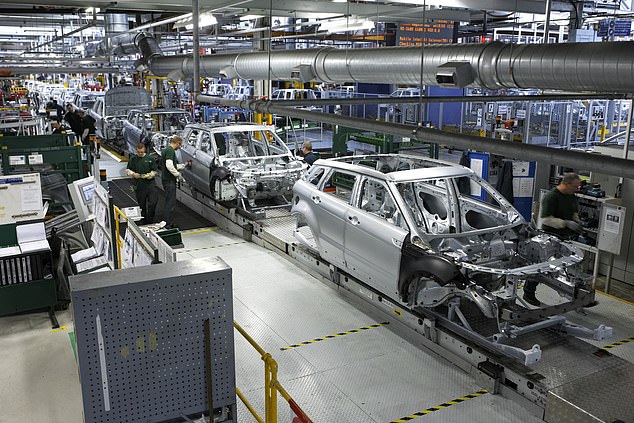
Jaguar Land Rover (JLR) has faced significant financial losses following a major cyber attack that disrupted its global vehicle production for five weeks. This incident is now considered the most financially damaging cyber event in British history. The UK's largest car manufacturer reported that its annual profits were wiped out due to the attack, which halted assembly lines in the UK, Slovakia, Brazil, and India.
The company disclosed losses of £485 million for the three months ending September 30, compared to a profit of £398 million a year earlier. These losses were attributed to costs of £196 million related to the cyber attack and expenses from job cuts. Sales for the same period fell by over £1 billion, a 24% decrease, reaching £4.9 billion.
Adrian Mardell, the departing chief executive, who will be replaced by PB Balaji next week, stated that JLR has made strong progress in recovering its operations safely and quickly after the cyber incident. He emphasized that the company is now back to producing luxury British cars, despite the challenges faced.
Economic Consequences of the Cyber Attack
The cyber attack had far-reaching economic effects, as it was revealed to have reduced the UK's GDP by 0.17 percentage points in September. Mardell highlighted how JLR plays a crucial role in the UK economy, noting that when the company suffers, its ecosystem also feels the impact.
The group anticipates further sales losses in the current quarter due to the ongoing effects of the shutdown. Mardell described the experience as an "incredibly difficult time" but expressed confidence that the business is now returning to its core operations.
He added that the cyber attack was unlike anything he had encountered in the auto industry, calling it a "massive learning curve" for the company. JLR had to suspend production across all its vehicle plants in the UK and overseas throughout September after shutting down its IT systems to mitigate the impact of the breach on August 30.
Production lines were shut down on September 1, with the first workers returning to factory floors on October 7 as part of a phased restart to full production.
Industry-Wide Impacts and Recovery Efforts
Industry figures showed that JLR's production suspension significantly affected the nation's passenger car outputs during September, which dropped by 27.1%. With the shortfall largely consisting of JLR products priced at an average of £70,000, the estimated value loss was around £1.33 billion.
Mike Hawes, chief executive at the Society of Motor Manufacturers and Traders, noted that JLR's unscheduled production stoppage placed the sector under "immense pressure." The attack affected over 5,000 organizations and is estimated to have cost at least £1.9 billion, according to the Cyber Monitoring Centre's (CMC) analysis.
Ciaran Martin, chairman of CMC's technical committee, stated that with a cost of nearly £2 billion, this incident appears to be the most financially damaging cyber event ever to hit the UK.
On September 28, the government provided a £1.5 billion loan guarantee to support JLR's supply chain and keep smaller businesses tied to JLR output afloat until full production resumed.
Supply Chain Challenges and Future Outlook
JLR confirmed it did not face any stoppages due to a supply crunch involving computer chips from Chinese-owned Nexperia. Some shipments of Nexperia’s chips have resumed after China eased an export ban, although European carmakers are still dealing with shortages.
Mardell noted that all companies must adapt to a world prone to supply-side shocks, which could involve maintaining slightly higher stock levels than desired. He mentioned that while the situation appears to be improving, there may still be issues as the supply chain could create future shortages.