Fugitive Flamingo Spotted on French Shore After Cornish Escape
A Fugitive Flamingo’s Journey Along the French Coast
A young flamingo named Frankie, who had escaped from a Cornish wildlife sanctuary, has been spotted strutting along the French coast. At just four months old, Frankie disappeared from Paradise Park in Hayle on November 2, despite having clipped feathers. This unusual escape led to an urgent appeal on Facebook for help in locating the bird, which resulted in several suspected sightings.
Yesterday, animal keepers shared an update indicating that a flamingo believed to be Frankie was seen on a beach in the Finistère area of western Brittany. The statement mentioned that while there is a population of greater flamingos in France, the young birds resemble Frankie closely. However, the keepers believe they can see the feathers on the right wing have been clipped, which could confirm the bird's identity. They are awaiting more photos to make a definitive identification.
Flamingos are known for their ability to fly long distances, but the fact that Frankie has traveled so far is both astonishing and reassuring. The bird appears to be in good health and has found a protected estuary system where it can feed. The sanctuary will continue to monitor the situation and provide updates as more information becomes available.
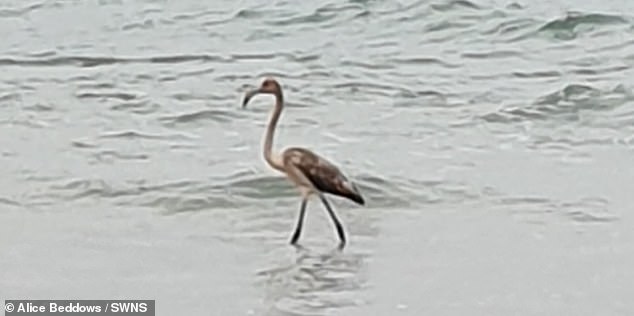
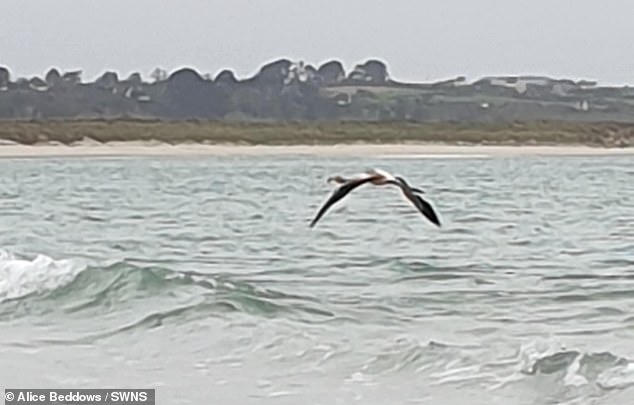
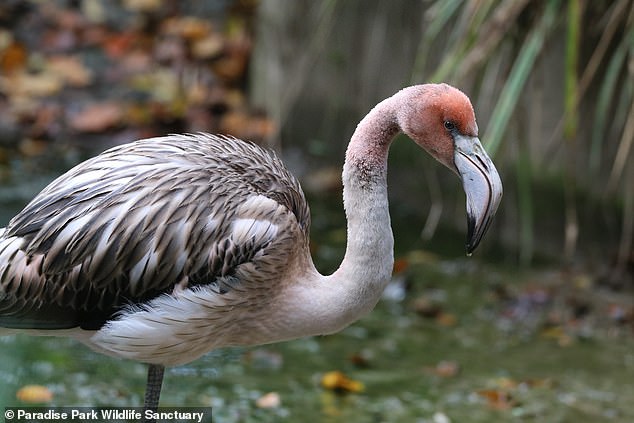
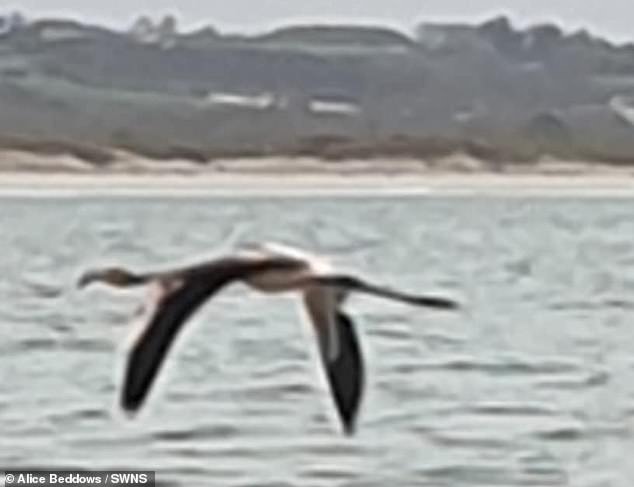
Photographs of the bird have been shared widely in an effort to locate her. One image shows the animal walking alone amidst the waves in Finistère, while another captures a flamingo with the same distinctive reddish head soaring through the sky with its large, patterned wings.
Frankie was last seen in the wild at 10:15 am on the day she went missing from Paradise Park at 8 am. Described as being "like a naughty teenager," her disappearance prompted a county-wide search. Park staff confirmed that although Southern France has a natural population of Greater Flamingos, the key identifier lies in the bird's wings.
The sanctuary remains pragmatic and open-minded in case the Brittany sighting involves a different bird. However, the park director expressed confidence that it is indeed Frankie, stating he is "99 per cent certain" of the bird's identity. Frankie is known for her distinct "very nasal honking sound."
Park director Nick Reynolds said, "I don’t think she knows what she’s looking for to be honest—she's just like a naughty teenager. We need to get her back as soon as possible; we are really beside ourselves to be honest." He added that the best scenario would be for Frankie to find her way to a sanctuary in the Netherlands or one in Southern France.
"I don’t want it to seem like we’re washing our hands of her, because we’re not. We’d love her back, but it will be difficult first to capture her in France and then rehome her in Paradise Park," he said.
The park explained that Frankie cannot survive long-term in Cornwall due to her special diet. While flamingos feed on algae and small prey, this would become more challenging as the weather gets colder. There are also risks from predators like foxes. When not flying, flamingos are on the ground, making them more vulnerable.
Frankie was born in July—the first chick to hatch from its nest and be reared by its parents at the park. Paradise Park, an award-winning wildlife sanctuary, is home to a variety of exotic birds, otters, red pandas, red squirrels, and Humboldt's penguins.
There are five species of flamingo worldwide, but none are native to Britain. These birds can be seen in captivity at several zoos, including Edinburgh, Marwell, and London Zoo.
Anyone who sees Frankie is encouraged to contact Paradise Park on 01736 753365, email them on info@paradisepark.org.uk, or message them on Facebook.
