Global Carbon Budget Near Exhaustion as Fossil Fuel Emissions Hit New Peak
Record High Emissions Expected in 2025
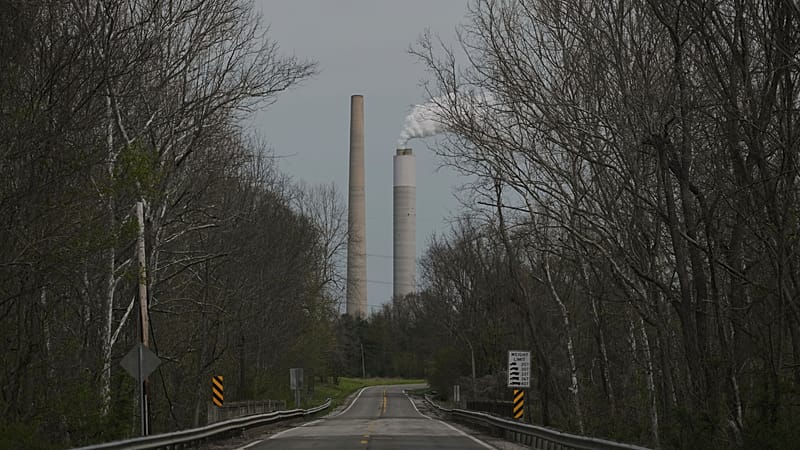
New research has revealed that emissions from fossil fuels are expected to reach a record high in 2025. This alarming trend highlights the urgent need for global action to mitigate climate change. The report emphasizes that the remaining carbon budget to keep global warming under 1.5°C is now “virtually exhausted.” Despite progress in decarbonizing energy systems in many countries, it is not enough to offset the rising global energy demand.
According to an international team of over 130 scientists, fossil fuel emissions will be 1.1 per cent higher in 2025 compared to the previous year. Coal, oil, and gas emissions are all projected to increase, with no signs of the necessary decline in global emissions. As a result, the level of CO2 in the atmosphere and the associated impacts of global warming continue to rise.
The Remaining Carbon Budget
This year marks 10 years since the Paris Agreement was signed. While there have been some positive developments, fossil fuel emissions continue to rise. The report calculates the remaining amount of carbon that can be emitted to keep global warming below the 1.5°C goal set by the agreement.
Professor Pierre Friedlingstein, from Exeter’s Global Systems Institute, who led the study, stated, “With CO2 emissions still increasing, keeping global warming below 1.5°C is no longer plausible.” He added that the remaining carbon budget for 1.5°C, which is 170 billion tonnes of carbon dioxide, will be gone before 2030 at the current emission rate. Climate change is now reducing the combined land and ocean (carbon) sinks, signaling that drastic emission reductions are needed.
Progress and Challenges
The Paris Agreement has had some impact on global emissions. The report found that total CO2 emissions have grown more slowly in the past decade—up by an average of 0.3 per cent per year—compared to the previous decade, where they increased by an average of 1.9 per cent per year.
However, some regions are experiencing increases. Emissions in the EU have fallen in previous years, but this year, colder weather has increased energy demand, causing emissions to rise by 0.4 per cent. Similarly, the US is projected to see a 1.9 per cent increase in emissions.
China’s emissions have started to plateau, increasing by 0.4 per cent. This slower growth is due to moderate energy consumption growth combined with significant renewable energy expansion. India's emissions are projected to increase by 1.4 per cent, while Japan's are expected to decrease by 2.2 per cent.
Efforts and Fragility
Efforts to tackle climate change are visible, with 35 countries successfully reducing their emissions while growing their economies. This is twice as much as a decade ago, and there has been important progress in reducing reliance on fossil fuels elsewhere. However, Professor Corinne Le Quéré, Royal Society research professor at the University of East Anglia’s School of Environmental Sciences, notes that this progress is still “much too fragile” to translate into the sustained decrease in emissions needed to address climate change effectively.
Sources of Emissions Increase
Several sources and carbon sinks contribute to annual global emissions. Total emissions are calculated by tracking human-caused emissions and comparing them to the amount of CO2 absorbed by land and ocean sinks. Overall, total global CO2 emissions are projected to be slightly lower than last year.
For fossil fuels, the rise is driven by all fuel types. Emissions from coal are up 0.8 per cent, oil by 1 per cent, and natural gas by 1.3 per cent. While emissions from shipping have remained flat, those from international aviation are projected to rise by a staggering 6.8 per cent in 2025.
The projected figure for land-use change, which includes deforestation, is down this year to 4.1 billion. This reduction demonstrates the success of environmental policies, with deforestation rates in the Amazon declining to their lowest level since 2014. However, emissions from permanent deforestation remain high at around 4 billion tonnes of CO2 per year. Approximately half of that total has been offset by reforestation, new forests, and regrowth.
Impact on Tropical Forests
The combined effects of climate change and deforestation have transformed Southeast Asian and large parts of South American tropical forests from CO2 sinks into sources. Instead of offsetting emissions, these areas are now contributing to the problem. This year’s report found that 8 per cent of the total rise in atmospheric CO2 concentration since 1960 is attributed to climate change weakening these vital land and ocean carbon sinks.
