Lost City Found? Scientists Uncover Submerged Remains in Kyrgyzstan Lake
Uncovering the Lost City Beneath Lake Issyk-Kul
The legend of Atlantis, a mythical city that vanished beneath the waves, has long captivated the imagination of historians and explorers alike. Now, scientists may have found evidence of another lost settlement, hidden beneath the waters of Lake Issyk Kul in Kyrgyzstan. This discovery could offer new insights into ancient civilizations and their connections to historical trade routes.
The Discovery of a Submerged Civilization
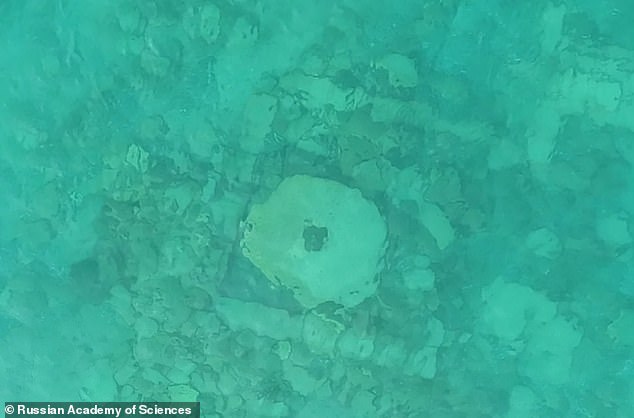
Researchers from the Russian Academy of Sciences have uncovered what appears to be the remains of a submerged city beneath Lake Issyk Kul. The lake, known for its striking blue color and immense size, is one of the deepest lakes in the world, with a maximum depth of 2,192 feet (668 meters). However, the ruins discovered are surprisingly shallow, making them accessible for exploration.
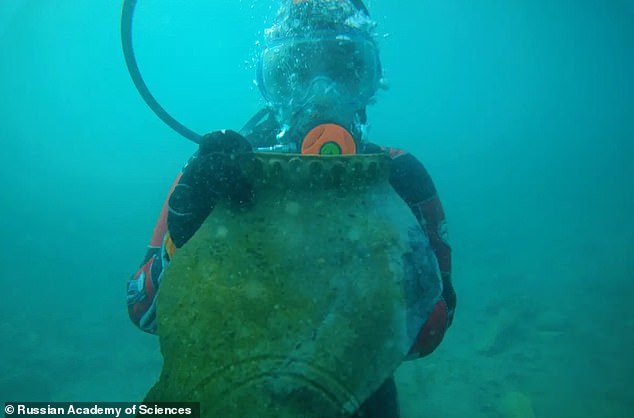
Among the findings are remnants of a medieval burial ground, large ceramic vessels, and parts of buildings constructed from baked bricks. These artifacts suggest that the city was once home to Muslim prayer houses, schools, bathhouses, and possibly even a grain-milling operation for producing bread. Expedition leader Valery Kolchenko, a researcher at the National Academy of Sciences of the Kyrgyz Republic, described the site as an "important" commercial settlement.
A Tragic Fate Similar to Pompeii
According to Kolchenko, the city met a catastrophic end in the 15th century, a disaster that can be compared in scale to the destruction of Pompeii. "The site we are studying was a city or a major trading hub," he said. The exact cause of the tragedy remains unclear, but it is believed that an earthquake may have played a significant role in the city's downfall.
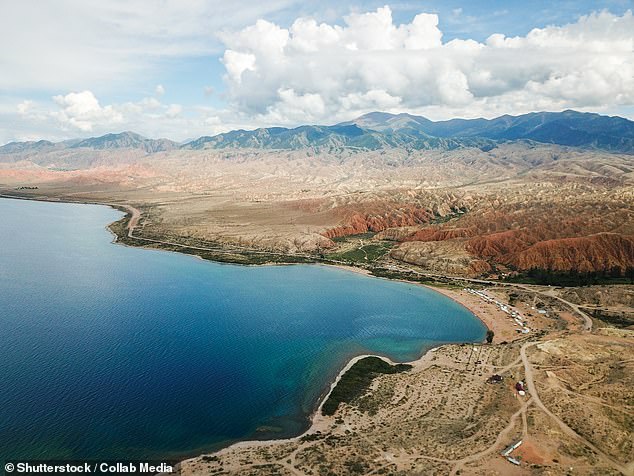
Lake Issyk Kul, located in the western Tianshan Mountains, stretches over 182 kilometers in length and 60 kilometers in width. It is a saline lake with no known outflow, though some experts believe it is connected to a local river through an underground channel. The dramatic rise of the lake over time has led to the submersion of ancient structures, now lying beneath the water.
Exploring the Sunken Ruins
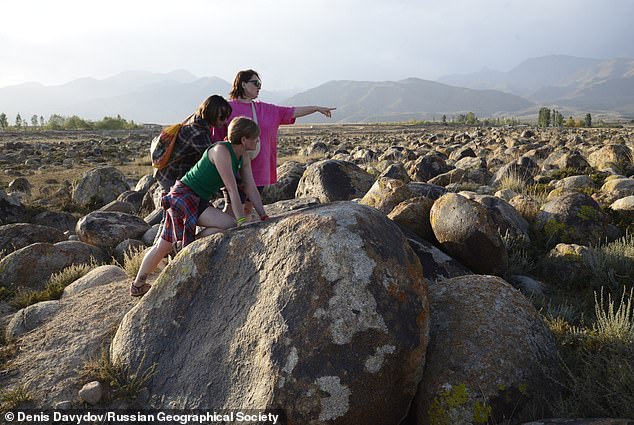
Excavations have taken place at the Toru-Aygyr complex, an important point on an ancient trade route near the northwest of the lake. Archeologists surveyed four underwater zones at depths ranging from three to 13 feet (one to four meters) along the shoreline. In the first zone, they found numerous fired-brick structures, including one containing a millstone used for grinding grain. Other discoveries included collapsed stone structures and wooden beams.
Researchers believe they have uncovered traces of a public building that may have served as a mosque, bathhouse, or madrassa, a school for Islamic education. The other zones revealed evidence of an early burial ground, a 13th-century Muslim necropolis, and structures made of mudbrick.
The Historical Significance of the Silk Road
The city at Lake Issyk-Kul was an important stop on the Silk Road, a vast network of trade routes that connected China and the Mediterranean for over 15 centuries. Active from the second century BC until the mid-15th century, the Silk Road facilitated the exchange of goods such as silk, spices, and precious metals, as well as the spread of ideas, technologies, and religions.
Burials found at the site show signs of traditional Islamic rituals, with skeletons facing north towards the Qibla, the direction Muslims turn during prayer. According to the Russian Geographical Society, which funded the project, these findings confirm that an ancient city once stood here.
The Future of the Research
Samples from the site have already been sent for analysis using accelerator mass spectrometry, a highly accurate method for determining the age of organic materials. The results will help researchers understand the timeline of the city's existence and the events that led to its submersion.
After the city fell, nomadic people took its place, and today the shoreline of the lake is dotted with small villages. Land sinking into the seafloor is not uncommon; many regions around the world, including Britain, have experienced similar phenomena, with former islands and coastal areas now submerged due to natural events.
Revisiting the Myth of Atlantis
While the story of Atlantis was first told by the Greek philosopher Plato over 2,300 years ago, some continue to believe that the legendary city may have actually existed. The discovery beneath Lake Issyk-Kul raises intriguing questions about whether there are more lost settlements waiting to be uncovered.
Could this underwater city provide clues about the origins of Noah’s Ark? Or might it lead to further revelations about the ancient world? As research continues, the mysteries of the past may soon come to light.
