Nationwide Vows to Keep All Branches Open Until 2030, Reviving High Streets
Nationwide Building Society's Commitment to Branches
Nationwide Building Society has made a bold commitment to keep all its branches open until at least 2030. This decision is seen as a significant boost for Britain's high streets, which have been struggling with the closure of many bank branches in recent years.
The move by Nationwide goes against the trend that has led to the closure of over two-thirds of bank branches in the past decade. By the end of next year, a total of 6,731 branches are expected to have shut down, as major banks increasingly shift their focus away from physical locations.
Several major banks have already closed numerous branches since 2015. For example, NatWest and RBS have closed 1,377 branches, while Bank of Scotland, Halifax, and Lloyds have closed 1,252. Barclays and HSBC have also closed 1,230 and 743 branches respectively. This trend has raised concerns among consumer groups and local businesses.
The Federation of Small Business (FSB) warns that the rapid pace of branch closures is harming the high street. It points to reduced footfall and a lack of infrastructure to support cash payments. More than a third of local businesses reported that the reduced ability to accept cash poses an extreme risk to their operations. Three in five businesses say their local branch has closed since the pandemic.
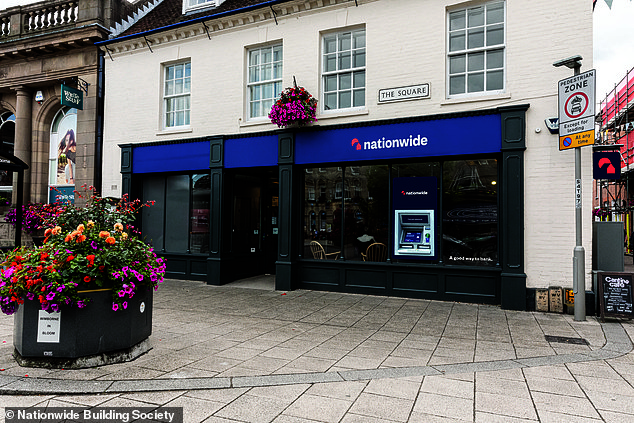
As a result of its commitment, Nationwide has extended its 'branch promise' from 2028 to 2030. The society acquired Virgin Money for £2.3 billion last year and has pledged not to close any of the Virgin branches, even if they are near a Nationwide branch. This means 696 locations will remain open for at least five years.
Nationwide now stands as the only branch in 133 towns and villages, including Beckingham, Dagenham, and Twickenham. This list is expected to grow in the coming years.
Dame Debbie Crosbie, chief executive of Nationwide, emphasized that the decision is not just a business move but a statement of values. She said, "Some say branches aren't commercially viable. Ours are thriving. This isn't just a business decision. It's a statement of values."
Sir Mel Stride, MP for Central Devon and Shadow Chancellor, recently wrote to Lloyds Bank regarding concerns about a branch closure in Okehampton, scheduled for March 2026. He praised Nationwide's pledge, stating it is a shot in the arm for high streets and local communities. He highlighted the impact of closures on residents and small businesses, emphasizing the need for local and accessible banking services.

Nationwide warns that branch closures disproportionately affect vulnerable customers, including older people who rely on face-to-face services. In the year to September, there was an 11% increase in the number of customers using branches. A third of current accounts and more than a fifth of savings accounts were opened in branches during the six months ending in September, indicating a growing preference for in-person banking despite the shift to digital.
Martin McTague, chair of the FSB, welcomed the decision, stating that bank branches are vital for small firms. He noted that keeping local outlets open helps preserve cash flow and access to services that online or mobile banking cannot easily replace. The addition of Virgin Money branches last year further enhances business banking availability.
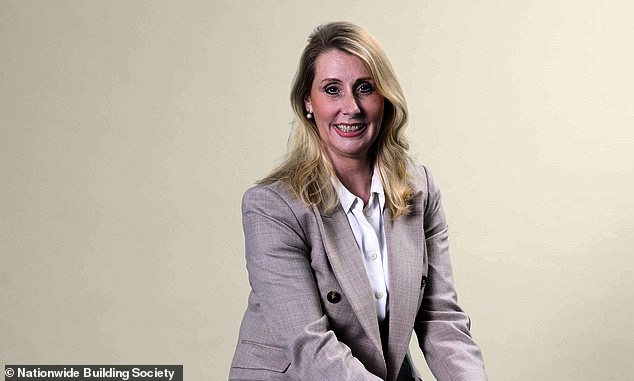
Debbie Crosbie: It's a Statement of Values
By Nationwide CEO, Dame Debbie Crosbie
When Nationwide acquired Virgin Money a year ago, we didn’t do what most companies do – close branches to cut costs. We did the opposite. And today, we’re proud to announce that every one of our 696 branches – whether Nationwide or Virgin Money – will remain open until at least 2030.
This isn’t just a business decision. It’s a statement of values. It reflects our belief in the power of branches to deliver real value to our members and communities. We see branches not as legacy infrastructure, but as vital for future service, support, and trust.
Branches are more than bricks and mortar. For many, they are lifelines. Older customers, those living with dementia, and people who are digitally excluded rely on face-to-face banking.
Some say branches aren’t commercially viable. Ours are thriving. In towns where we’ve become the last one standing, people opening current accounts in branches has rocketed, and ATM usage surged by 25%. That’s not decline – that’s demand.
That’s why we’re investing in the High Street. This isn’t just good for society – it’s good business. Our branch strategy is commercially sound and socially impactful.
We’ve seen a 28% rise in new current accounts being opened in branches, while new savings account openings in branches have jumped by more than 30%. Indeed, market data shows that 68% of all branch sales in the UK were through a Nationwide branch.
And it’s not just banking that’s better through branches. We host dementia clinics in over 200 branches, helping over 100,000 people. We’ve created more than 400 safe spaces for domestic abuse support. And our scam checker service protected 800,000 customers from making more than £300,000 of fraud payments per month.
These services don’t exist in an app. They exist in person, in communities, in branches.
Nationwide is a mutual, owned by our members. I’ve spent most of my career in the commercial sector, but I’ve found something special in mutuality – the ‘secret sauce’ I’d been searching for.
It’s possible to be ambitious and commercially sharp while remaining truly purpose driven. That’s what we’re doing.
Our acquisition of Virgin Money expanded our reach. Together, we’re supporting local economies and small businesses, bringing banking back to places that need it most. We’re not just preserving the past – we’re building the future.
But we can’t do it alone. We need a collective approach to safeguarding access to cash and banking services. In return, Nationwide’s promise is simple: we’ll be there. In person. In your town. On your high street. Until at least 2030.
Because banking should be fairer, more rewarding, and for the good of society.
