Swedish Town Relocated 3 Miles, Now 10°C Colder
The Relocation of Kiruna: A Town Shifting for Survival
Kiruna, Sweden's northernmost settlement, has been undergoing a dramatic transformation. Over the years, the town has been gradually moved three miles to a new location, driven by the need to address the growing safety risks associated with iron ore mining at its original site. However, this relocation has sparked complaints from residents who are now facing significantly colder temperatures in their new home.
According to a recent report, the decision-makers behind the project overlooked critical factors such as the heavy winds at the new location and the overall layout of the town. One resident described the new town center as "a damn wind tunnel," highlighting the challenges posed by the design choices made during the relocation process.
Researchers from the University of Gothenburg have criticized the planners for not optimizing the urban climate during the city's redesign. Jennie Sjoholm, the author of the report and a specialist in built heritage, explained that the new location in a valley was chosen for its connections with existing infrastructure. However, this choice led to cold air being easily trapped in the area, making the situation worse during the winter months.
The town's new layout has only exacerbated the issue. With narrow streets and high buildings, Kiruna has become a wind tunnel that blocks the winter sun from reaching the ground. Sjoholm pointed out that the challenges of urban planning in the Arctic Circle are well-known, but "that knowledge was not fully used" in this case.
Instead of focusing on addressing these environmental concerns, town planners prioritized adding value to the town by introducing three shopping centers, a square, and a new town hall. This approach has raised questions about whether the needs of the residents were adequately considered during the planning process.
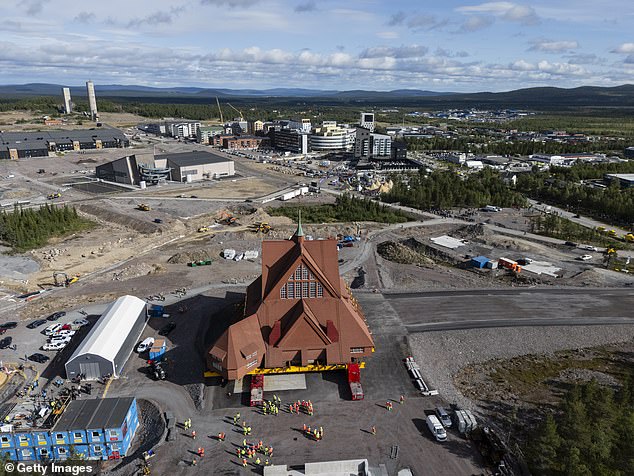
One of the most notable aspects of Kiruna's relocation is the movement of the 113-year-old Kiruna Church. Earlier this year, the church embarked on a two-day journey to its new home to prevent it from sinking into the nearby iron ore mine. The church was carefully transported across on a vast convoy of trailers, traveling at around 500 meters per hour.
The relocation process for the town began almost two decades ago and is expected to continue for years to come. The new town center was officially inaugurated in September 2022. The cost of moving the church alone is estimated at 500 million kronor ($52 million), with the expense being covered by LKAB, the state-owned mining company.
LKAB first alerted authorities in 2004 that recovering more iron ore from the Kiruna mine would require further excavation, which could destabilize the city's center. This warning set the stage for the relocation efforts that followed.
Residents have mixed feelings about the changes. One resident, Mia Mörtlund, expressed a sense of nostalgia and sadness when the church was moved, reflecting the sentiments of many who feel more sentimental about the old city than angry about the relocation. She noted that "for most people in Kiruna, the fact that the town and its inhabitants will have to move is accepted as part of life."
Mikael Stenqvist, an architect at White, echoed this sentiment, stating that the relocation is seen as a necessary part of life for the residents of Kiruna. However, the challenges posed by the new location, including the colder temperatures and the wind tunnel effect, continue to be a source of concern.
As the town continues to evolve, the question remains whether the relocation will ultimately benefit the residents or if the challenges faced will outweigh the advantages. The future of Kiruna will depend on how well the lessons learned from this experience are applied in the ongoing development of the town.
