Almaty Art Museum Unveils Cultural Gem in Kazakhstan's Heart
A New Cultural Landmark in Almaty
The opening of the Almaty Museum of Arts has marked a significant moment in the cultural landscape of the region. This museum, founded by businessman and philanthropist Nurlan Smagulov, is home to over 700 artworks from Kazakhstan and Central Asia, as well as pieces by renowned international artists. Its diverse collection spans various media, genres, and perspectives, aiming to become a central hub for contemporary art in Central Asia.
Architectural Marvel
Located at the foothills of the Tian Shan mountains, the museum itself is a work of art. Designed by British firm Chapman Taylor, the 10,060-square-meter complex was completed over three years. The building features two intersecting wings — one clad in Jura limestone, the other in aluminium — symbolizing Almaty’s mountainous terrain and urban environment.
Art Beyond the Walls
Before visitors even step inside, the museum's outdoor space offers a glimpse into its artistic vision. Large-scale installations set the tone for the experience ahead.
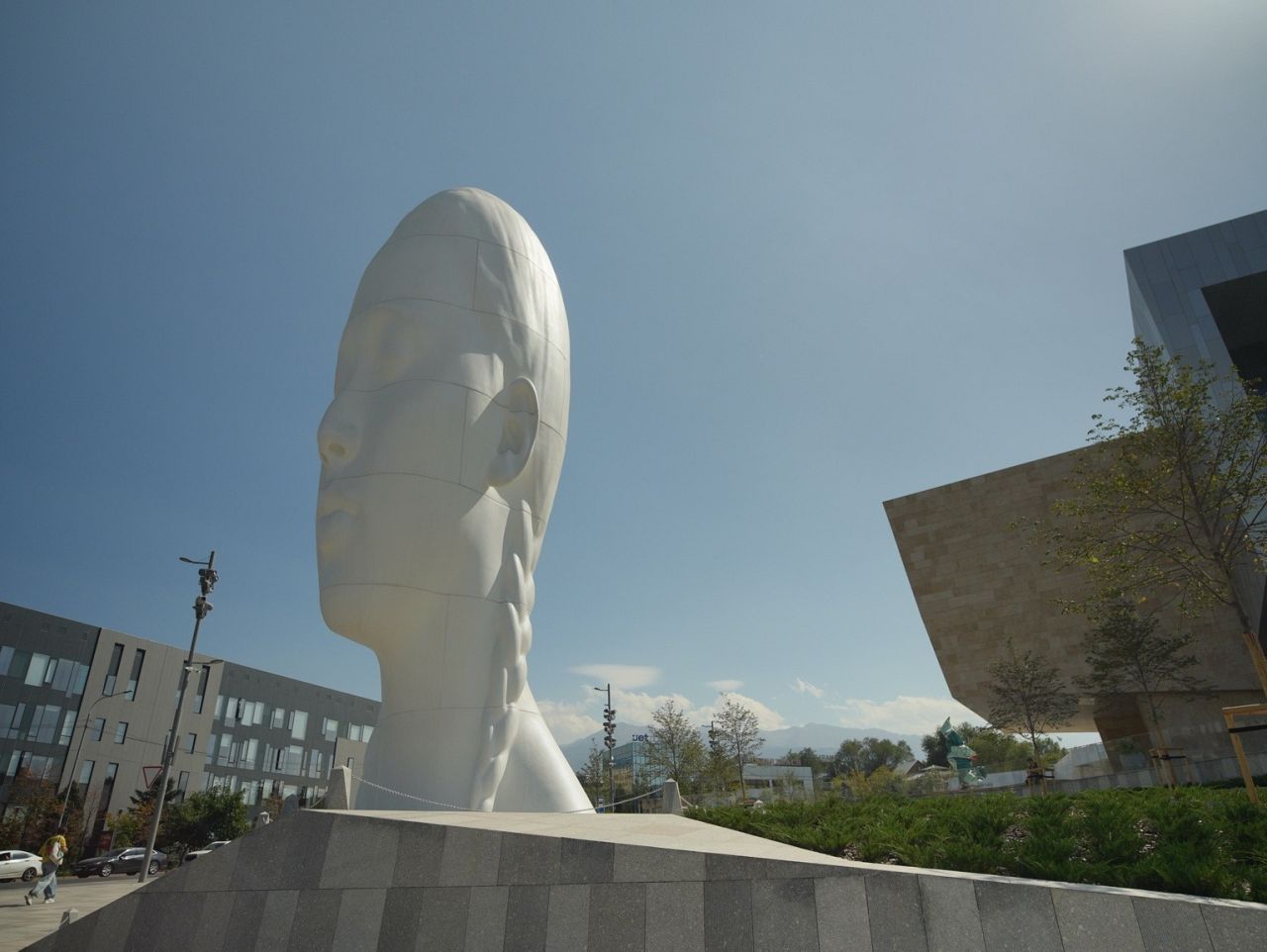
Spanish visual artist, sculptor, and designer Jaume Plensa’s NADES (2023) presents a 12-meter portrait of a young woman with closed eyes and a traditional Kazakh braid, offering a moment of calm amid the city’s urban flow.
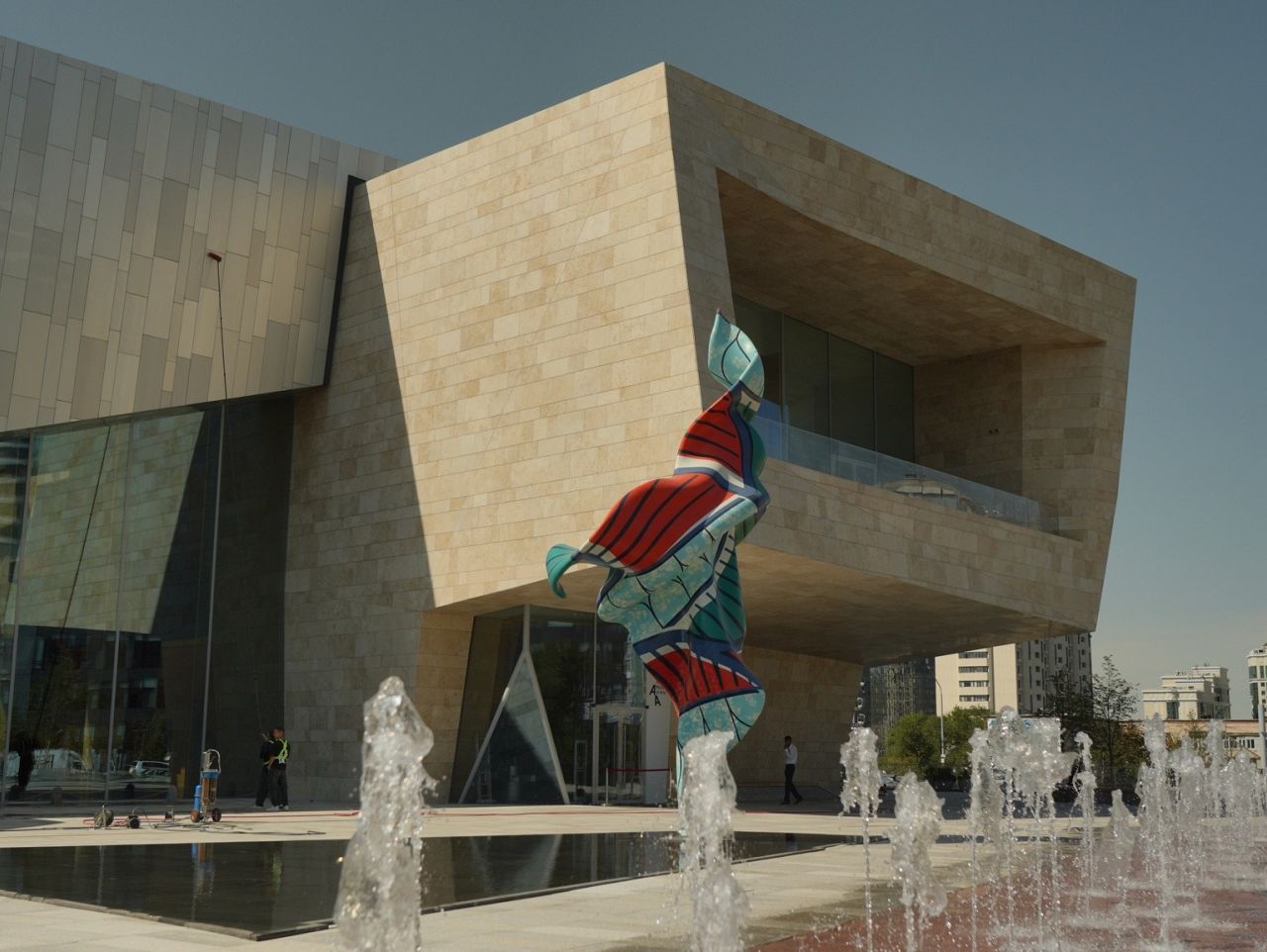
British-Nigerian artist Yinka Shonibare’s Wind Sculpture (TG) II (2022) reflects on Central Asian traditions, where scarves hold cultural significance. The 12-meter-high work takes the form of a wind-blown aluminium scarf painted in vibrant Ankara-inspired patterns, reflecting on layered cultural identities and colonial legacies.
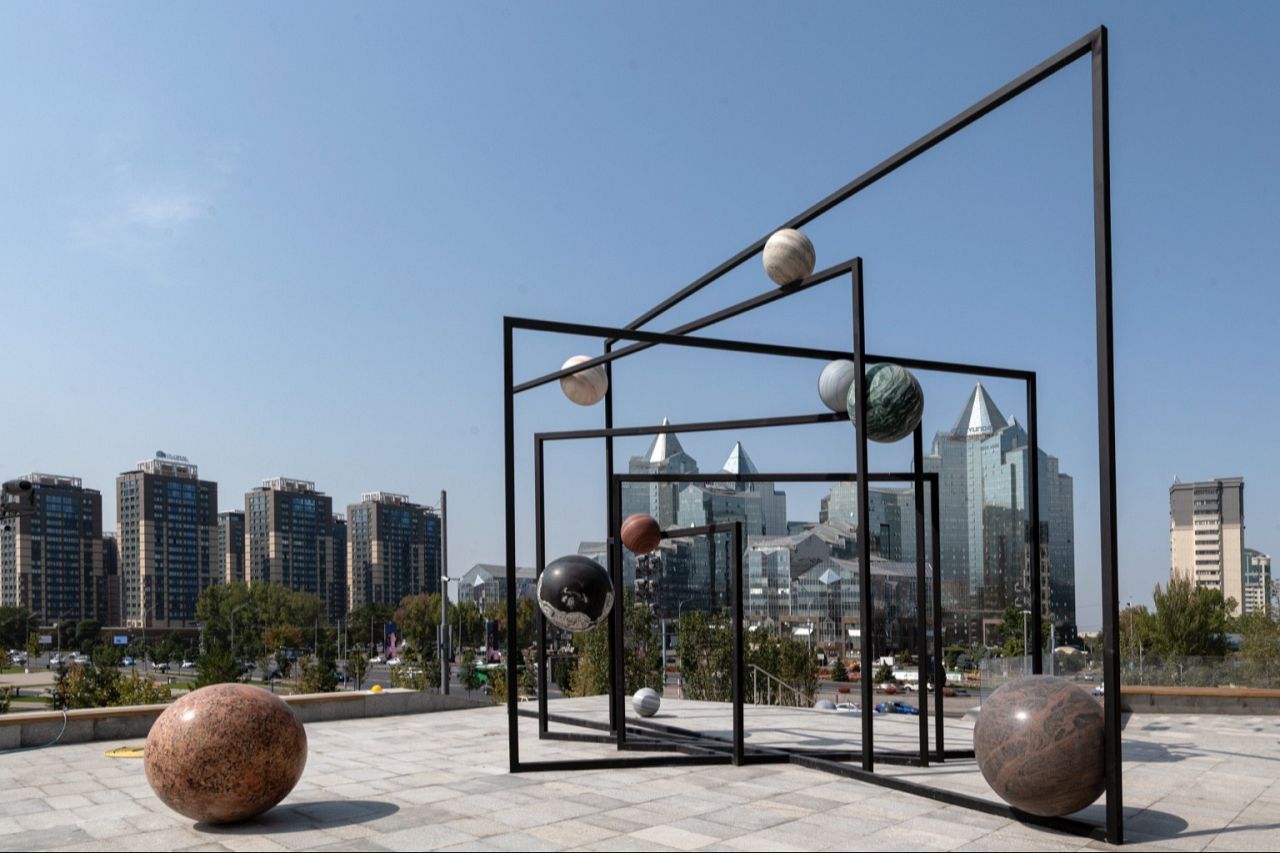
Berlin-based artist Alicja Kwade’s Pre-Position (2023), inspired by Kazakhstan’s Torysh Valley, combines stone spheres and steel forms to evoke celestial systems and ancient astronomical tools — a meditation on time, gravity, and universal connection.
Qonaqtar: Guests of the Steppe
The museum opened with two exhibitions, the first titled Qonaqtar, meaning “Guests” in Kazakh. Focused on artists from the 1960s, the exhibition begins with works portraying nomadic culture, daily rituals, food, and festive gatherings.
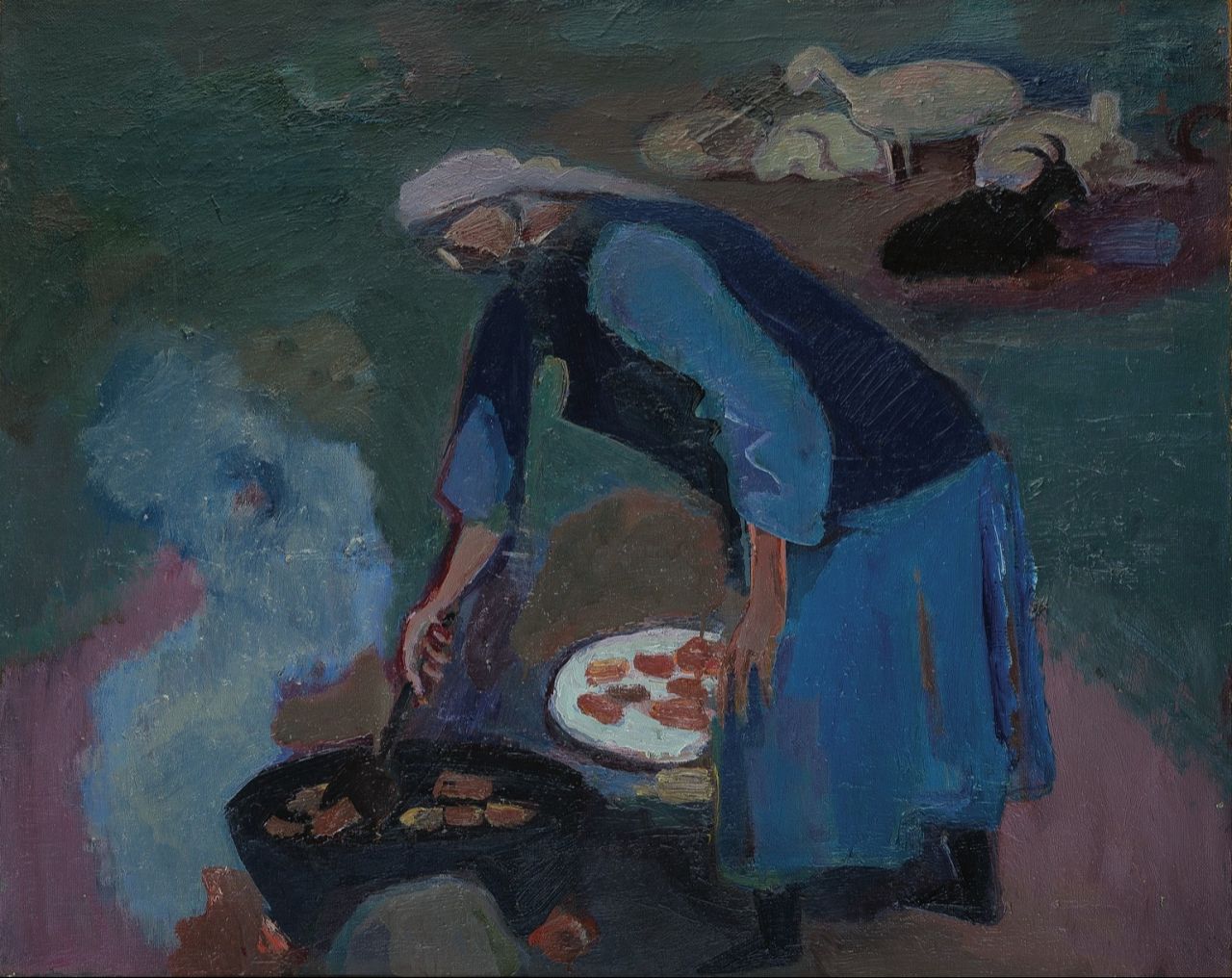
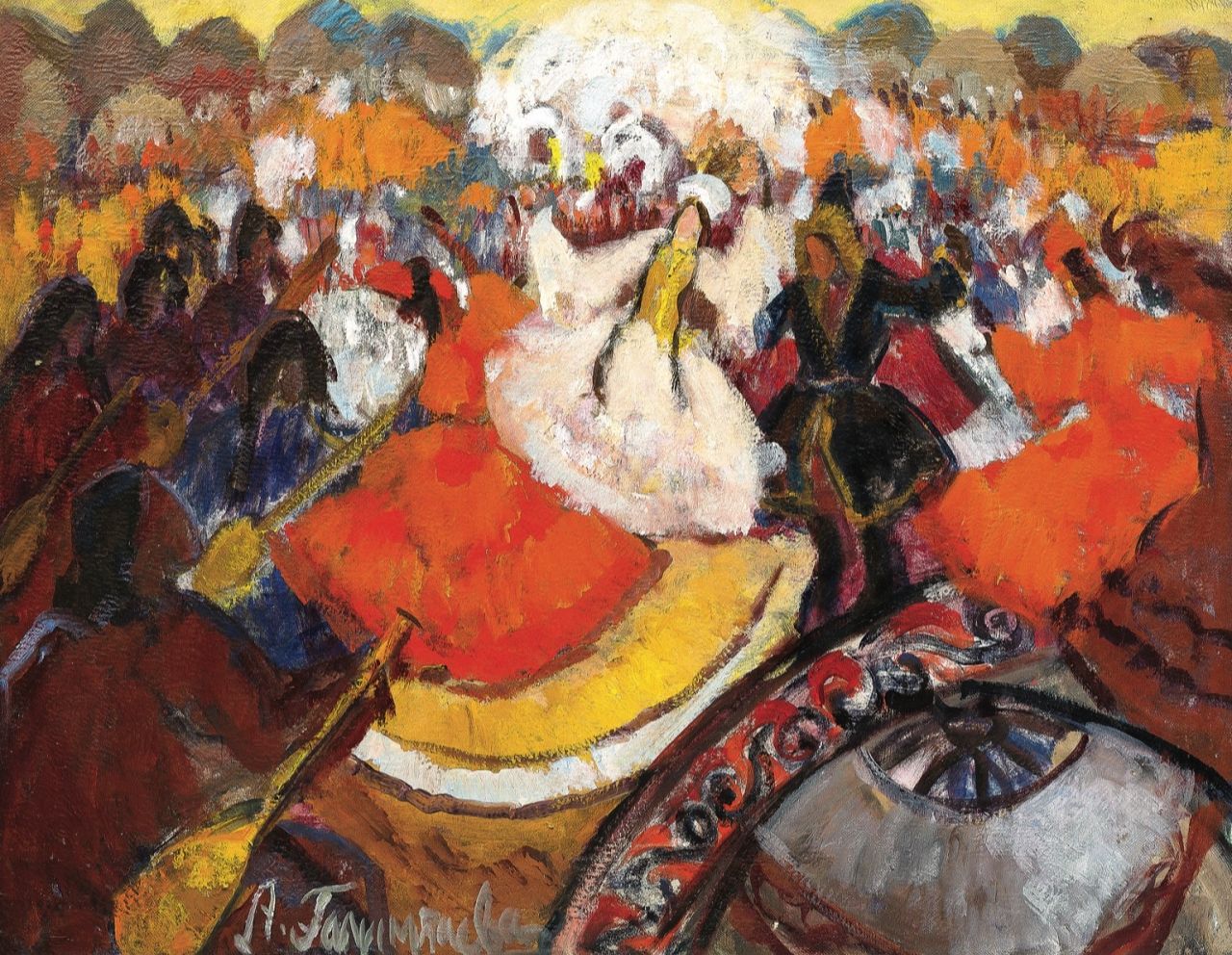
Highlights include Bakhtiyar Tabiyev’s Baursaks (1993), depicting a woman frying traditional dough, and Aisha Galimbayeva’s Shepherd’s Feast (1965). As visitors move deeper into the hall, the exhibition turns toward more complex reflections, juxtaposing the weight of Soviet restrictions with the richness of Central Asia’s artistic heritage.
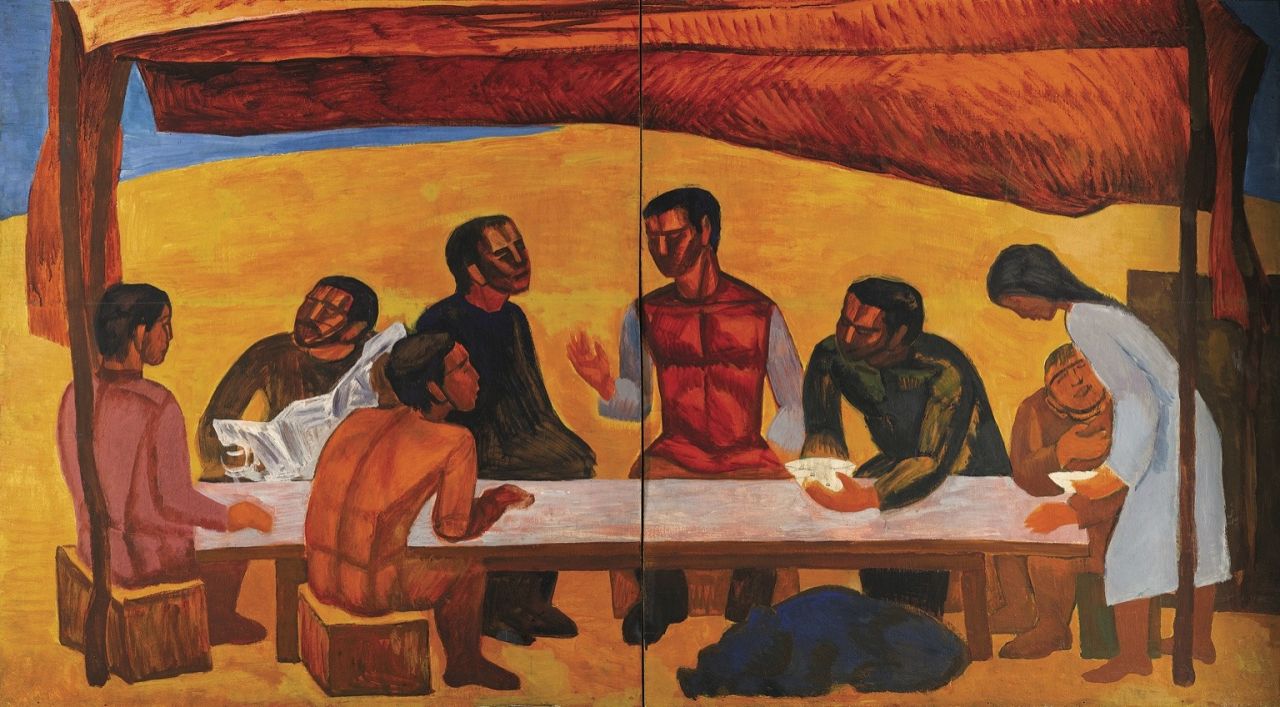
At the heart of the exhibition is Salikhitdin Aytbayev’s photograph On Virgin Soil. Lunchtime (1960s), addressing the Virgin Lands campaign (1954–1965), a Soviet effort to plough vast steppe regions to boost grain production, marked by labour enthusiasm, infrastructure building, and mass migration into the region.
I Understand Everything: Almagul Menlibayeva’s Retrospective
The museum also presents I Understand Everything, the first retrospective of Almagul Menlibayeva, a multidisciplinary artist whose practice spans painting, textiles, performance, photography, film, and new media. Known for blending Eurasian myths, shamanistic imagery, and post-Soviet realities, Menlibayeva has developed what she calls a personal and political “cosmology” that examines identity, memory, and cultural resilience.
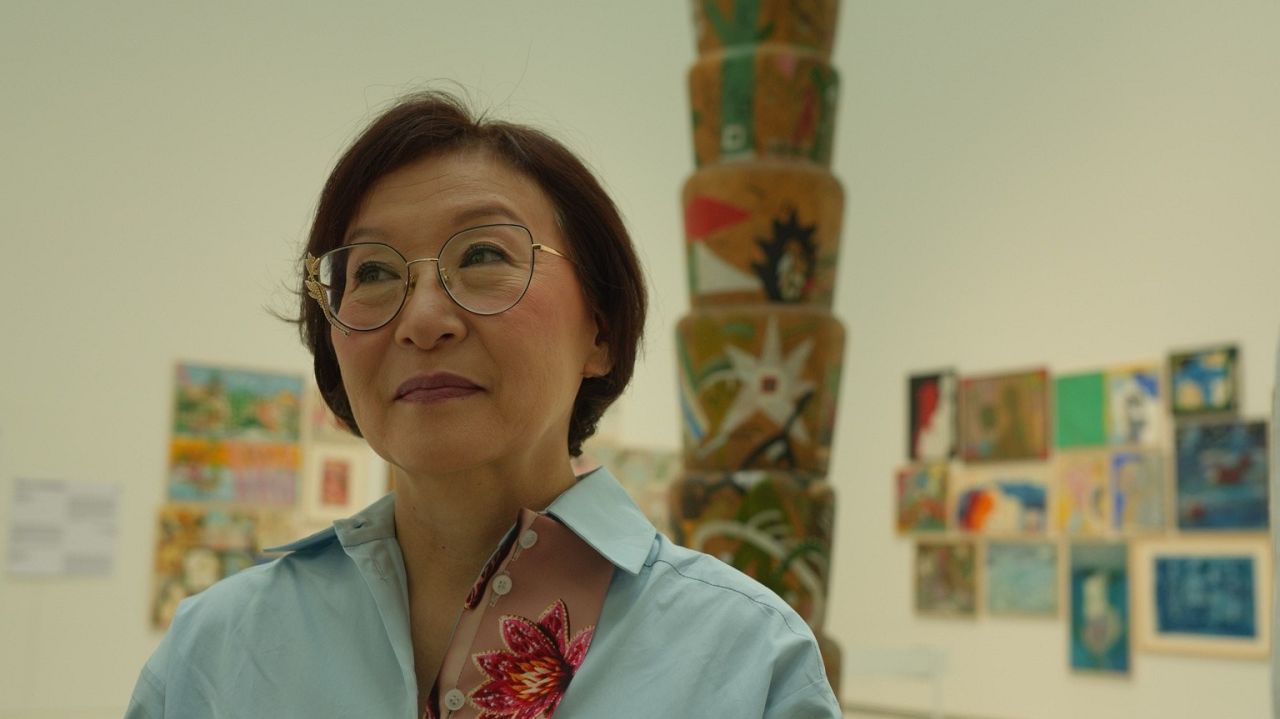
“We are so glad to finally have a space where we can truly think,” Menlibayeva says. “It feels like a temple of art — and artists have so much to share. This year I’ve had many exhibitions in Hong Kong, Taiwan, and Bangkok. Everywhere, people are deeply curious about Kazakhstan, about Central Asia. We have the perspective of looking through a post-socialist lens. We are multidimensional.”
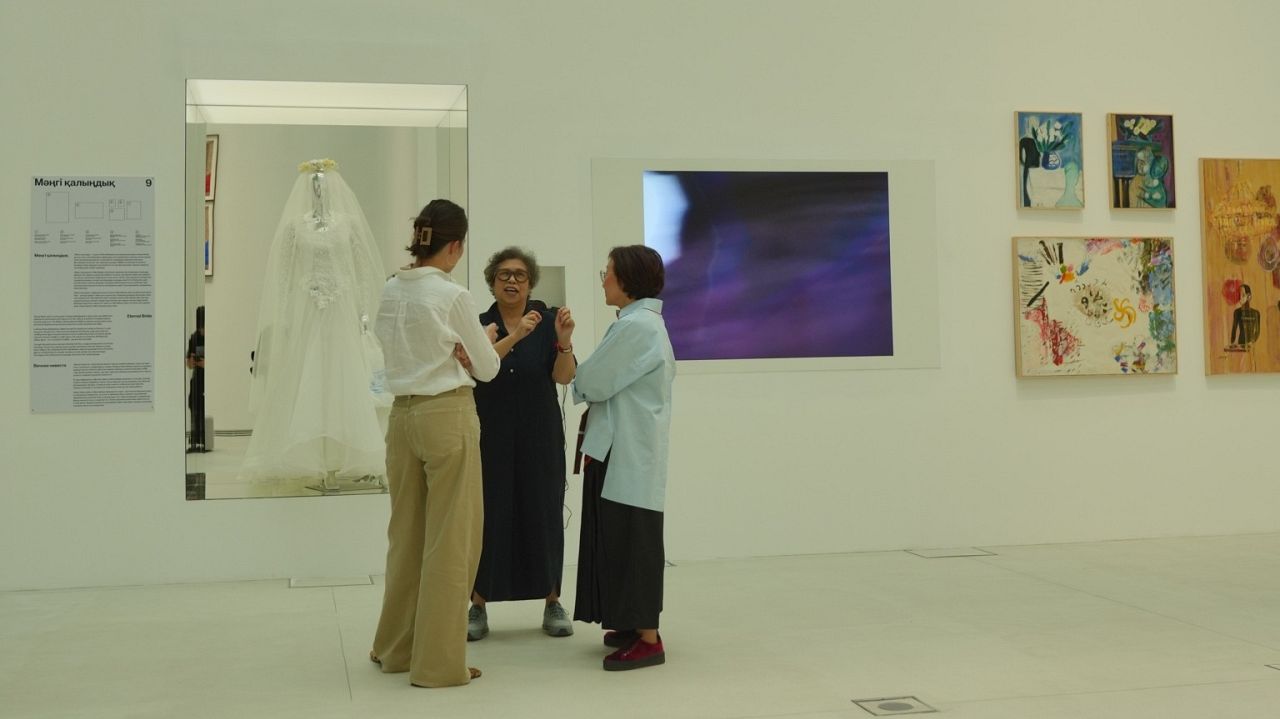
Curated by Gridthiya Gaweewong, the exhibition unfolds in two chapters. The first revisits the Kazakh steppe, the Aral Sea, and the Semipalatinsk nuclear test zone, culminating in the multi-channel installation Kurchatov 22. The second turns to Kazakhstan’s geopolitical terrains and sites of memory, featuring works on Stalin-era labour camps and women’s agency along the Silk Road.
International Perspectives
Alongside its Kazakh and Central Asian collections, the museum dedicates several rooms to leading international artists.
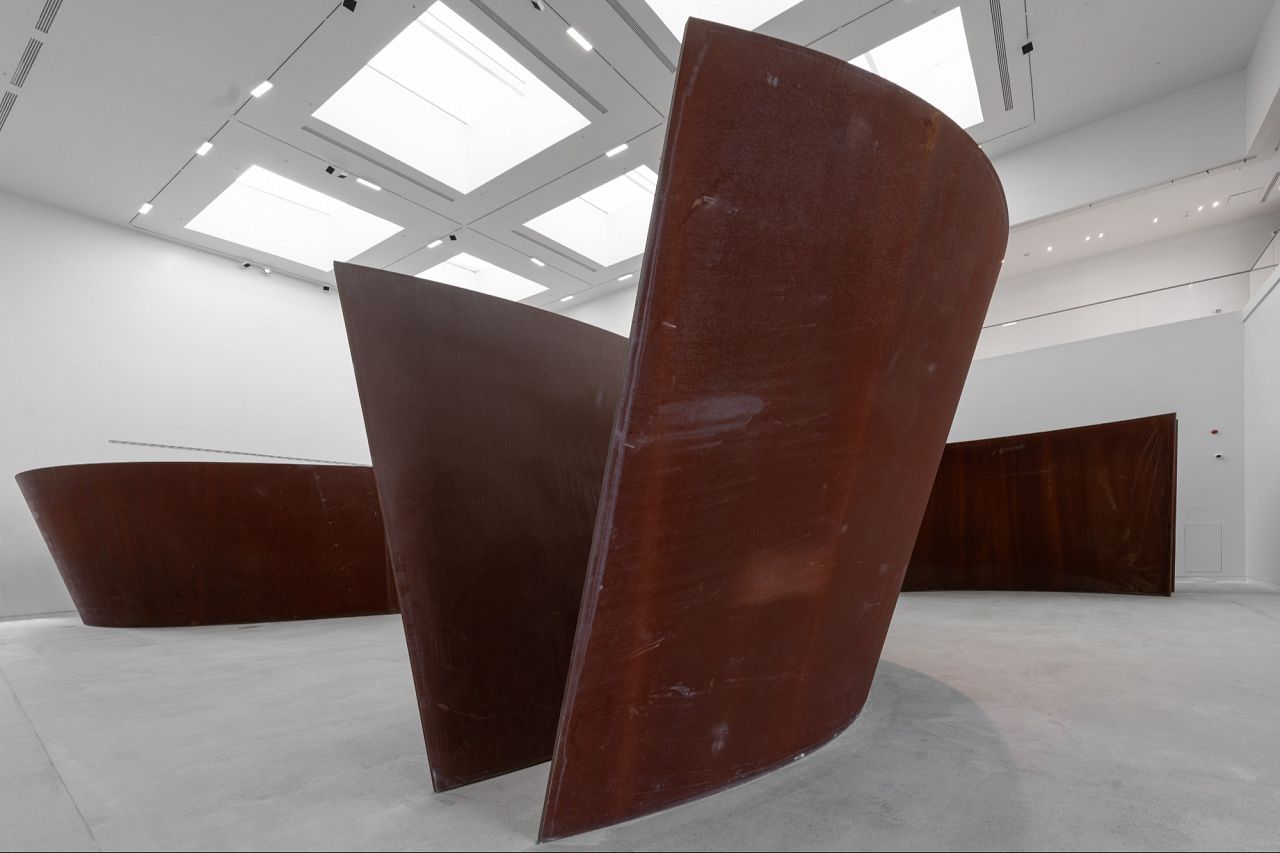
American sculptor Richard Serra’s Junction (2011) envelops viewers in vast curving steel forms that redefine the experience of space. Inside the long steel labyrinth, every step produces a heavy echo against the walls, amplifying a sense of weight and pressure.
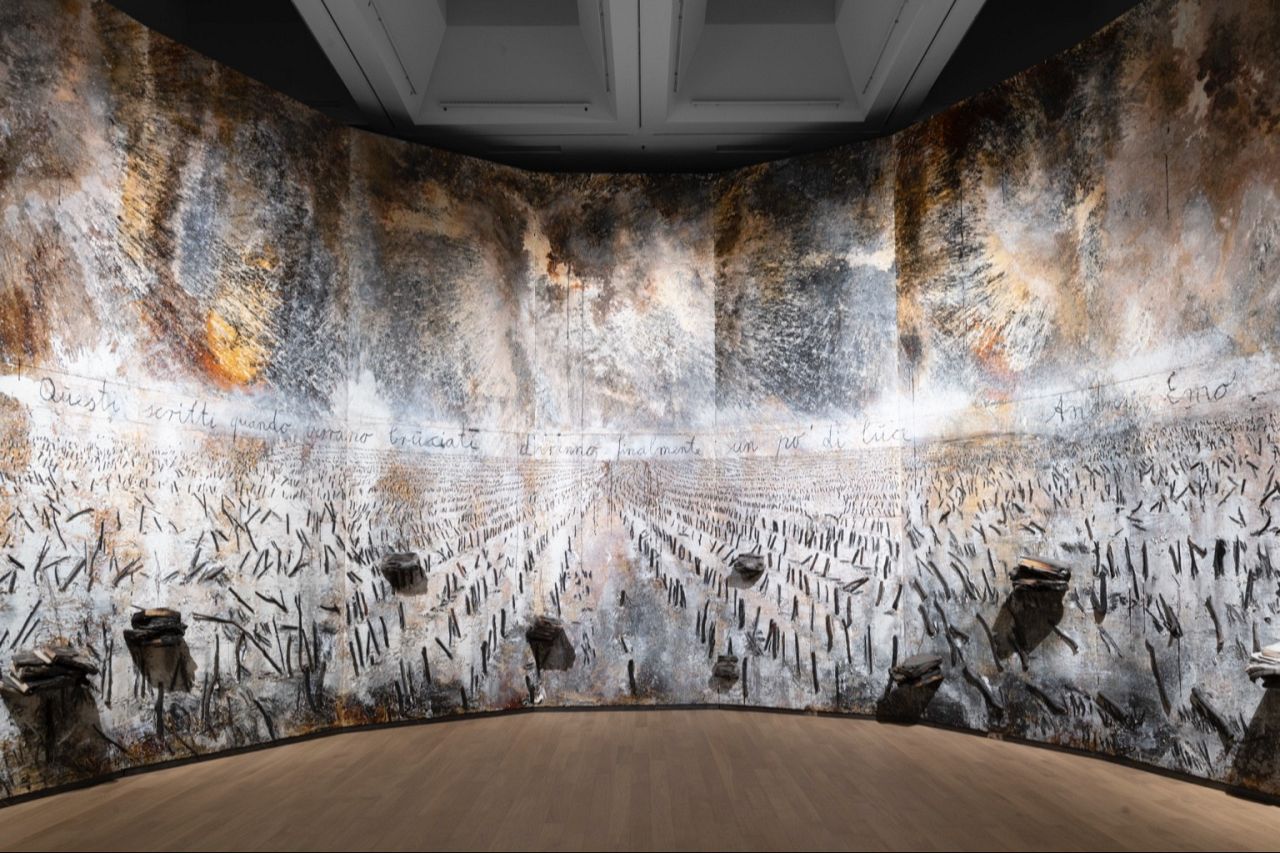
In the room of German artist Anselm Kiefer, the scent of charcoal fills the air. His installation Questi scritti, quando verranno bruciati, daranno finalmente un po’ di luce (2020–21) combines oil on canvas with burnt books and metal wire, evoking destruction and renewal.
Two additional rooms present iconic works of contemporary art: Yayoi Kusama’s Infinity Mirror Room: LOVE IS CALLING (2013), an immersive environment of light, pattern, and poetry, and Bill Viola’s Stations (1994), a meditative video installation on transformation, inspired in part by Sufi philosophy.
Future Vision
Looking ahead, the museum plans to rotate its collection and stage more solo exhibitions, while partnering with international curators and institutions. With workshops, education programs, and a conservation lab in development, it aims to grow into a vibrant hub for art and dialogue in Central Asia.
