Blue Origin's First Booster Landing Marks NASA's Mars Orbiter Launch
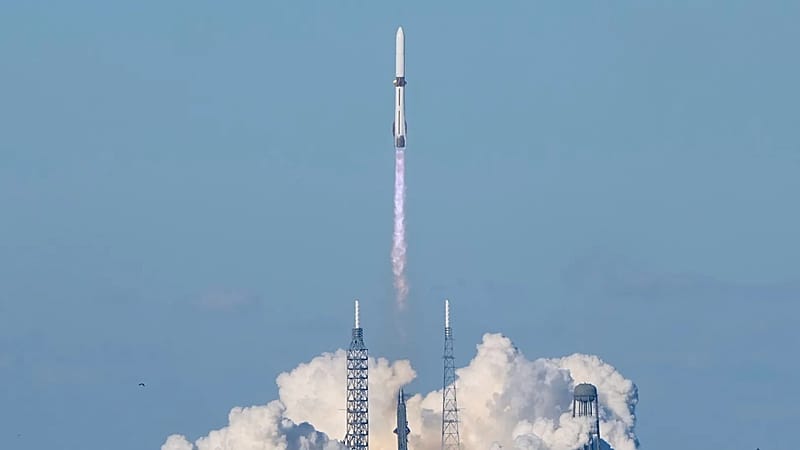
Blue Origin's New Glenn Rocket Successfully Launches with NASA's Mars Mission
Blue Origin has made history by launching its New Glenn rocket, marking a significant milestone in space exploration. The 321-foot-tall rocket took off from Cape Canaveral on Thursday, carrying NASA’s twin Escapade Mars orbiters on a multi-year journey to the red planet. This launch was highly anticipated and came after several days of weather-related delays, which added to the excitement surrounding the mission.
One of the most remarkable achievements of this launch was the successful landing of the rocket's booster on an ocean platform. This marked the first time that Blue Origin has managed to land the booster upright, showcasing the company's advancements in reusable rocket technology. The ability to recover and reuse rocket components is a critical step towards making space travel more cost-effective and sustainable.
The twin orbiters, part of NASA's Escapade mission, are set to spend a year near Earth before embarking on their journey to Mars in 2025. They are expected to arrive at the red planet in 2027, where they will conduct detailed studies of Mars' upper atmosphere and magnetic fields. These studies aim to provide valuable insights into the planet's climate and geological history, contributing to our broader understanding of planetary science.
The mission, which is managed by the University of California, Berkeley, is considered a low-cost endeavor compared to other space missions. Despite its relatively modest budget, the project is expected to yield significant scientific data that could enhance future Mars exploration efforts.
Key Details of the Mission
- Launch Date: The mission launched on Thursday, following several days of weather-related delays.
- Rocket: The New Glenn rocket, standing at 321 feet tall, was used for this launch.
- Mission Objective: The twin orbiters are designed to study Mars' upper atmosphere and magnetic fields.
- Timeline: The orbiters will spend a year near Earth before heading to Mars in 2025, arriving in 2027.
- Management: The mission is managed by UC Berkeley, highlighting the university's role in advancing space research.
