Blue Origin's Mars Mission Sparks Space Race with SpaceX
Blue Origin's New Glenn Rocket Successfully Launches NASA Mars Missions
Jeff Bezos' space company, Blue Origin, has made a significant leap in the ongoing space race with Elon Musk's SpaceX. The company successfully launched two NASA spacecraft destined for Mars using its New Glenn rocket. This marks another milestone in the competition between the two tech billionaires as they strive to dominate space exploration.
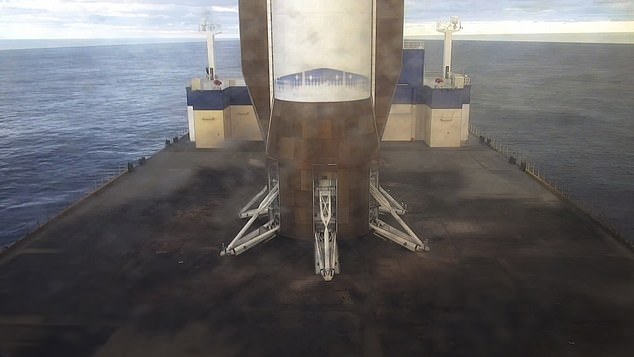
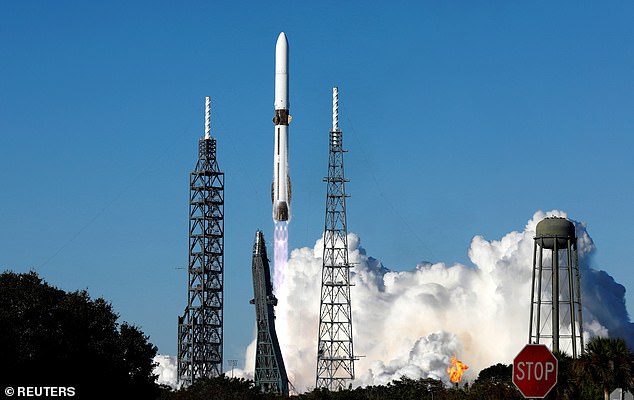
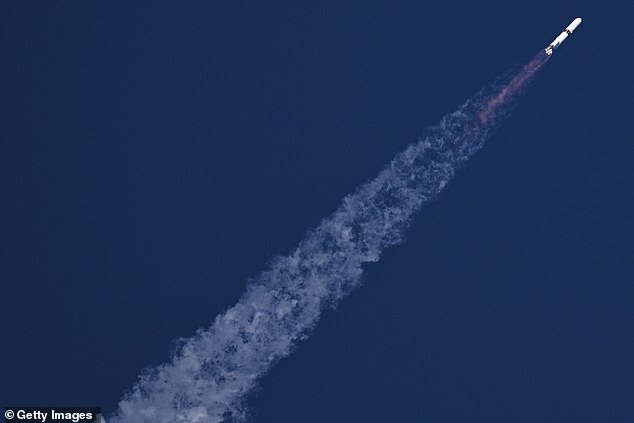
The launch took place from the Cape Canaveral Space Force Station in Florida at 15:55 local time (20:55 GMT). The 321-foot (98 m) New Glenn rocket carried NASA's twin ESCAPADE Mars orbiters into space, setting them on their journey to the Red Planet. Just 20 minutes after liftoff, the rocket’s booster landed upright on a barge located 375 miles (600 km) offshore, showcasing the company’s progress in reusable rocket technology.
This launch had faced several delays due to poor weather conditions and an unusually strong solar storm that caused auroras to be visible as far south as Florida. Despite these challenges, the mission was completed successfully, marking the second successful launch of the New Glenn rocket.
A Step Toward Lunar Exploration
As the NASA spacecraft escaped Earth’s atmosphere, Blue Origin employees expressed excitement about the possibility of a private lunar mission, chanting, “Next stop, moon!” This sentiment highlights the company’s ambitions beyond Mars, aiming to explore the Moon and potentially establish a presence there.
The New Glenn rocket's previous test flight in January delivered a prototype satellite into orbit but failed to land on the barge. However, this recent success is a much-needed win for Blue Origin, which has faced challenges in its space exploration endeavors.
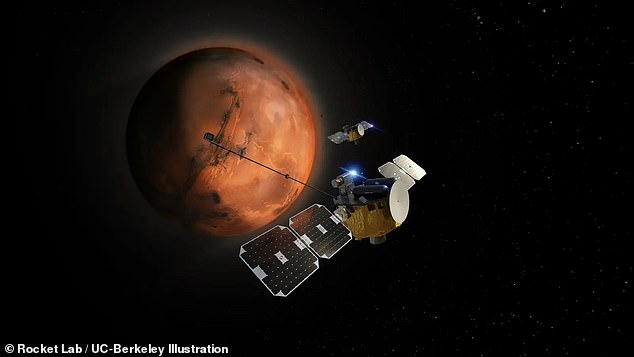
The launch was part of a NASA-backed scientific mission led by scientists from UC Berkeley. The mission aimed to deliver the twin ESCAPADE (Escape and Plasma Acceleration and Dynamics Explorers) spacecraft into Martian orbit. These orbiters will remain near Earth for about a year before taking advantage of the gravitational pull of Earth to slingshot themselves toward Mars, arriving in 2027.
Once in orbit around Mars, the ESCAPADE spacecraft will gather data on the planet's upper atmosphere and magnetic fields. This information could help scientists understand how solar wind interacts with Mars' atmosphere, providing insights into how the planet lost most of its atmospheric gases over time. This knowledge could reveal how Mars transformed from a potentially habitable world with lakes, rivers, and oceans into the barren desert it is today.
Technical Specifications of New Glenn
- Height: 98 m
- Diameter: 7 m
- Thrust: 17,100 kN
- Stages: 2
- Low-Earth orbit payload: 45,000 kg
- Geostationary transfer payload: 13,600 kg
- Successful launches: 2
- Reusability: First stage designed for a minimum of 25 flights
Sean Duffy, acting NASA administrator, emphasized the importance of the data collected by ESCAPADE, stating, "All of this information will be critical to protect future NASA explorers and invaluable as we evaluate how to deliver on President Trump's vision of planting the Stars and Stripes on Mars."
Cost-Effective Space Exploration
With a budget of just $80 million (£60.7 million), this mission is relatively inexpensive compared to other space science projects. A key factor in keeping costs low is the ability to recover the booster stage after launch by catching it on a barge. If Blue Origin can consistently land its boosters, it can reuse or recycle them, significantly reducing the cost per launch.
This capability is crucial for Jeff Bezos, as it allows Blue Origin to compete with SpaceX, which has been landing its boosters for a decade. The New Glenn rocket is five times larger than Blue Origin’s New Shepard rocket, which sends wealthy clients and celebrities like Katy Perry to the edge of space.
Designed as a direct rival to SpaceX's Starship rocket, the New Glenn is intended to take astronauts to the Moon and eventually to Mars.

Shifting Dynamics in the Space Race
Elon Musk has long been an advocate for human exploration of Mars and was initially seen as the frontrunner for NASA contracts related to such missions. However, after a public falling out with the Trump administration and NASA director Sean Duffy, Musk's dominance over American space exploration is looking less certain.
Blue Origin already holds a NASA contract to bring astronauts to the Moon with the Artemis V mission in 2030. Meanwhile, SpaceX secured the contract for NASA's first lunar landing in over 50 years with Artemis III.
Blue Origin also plans to launch a prototype 'Blue Moon' Lunar lander on New Glenn in a demonstration mission within the coming months. If the company can demonstrate its ability to succeed in both Mars and Moon missions, it could signal a closer space race than previously thought.
Future Prospects
The recent success of the New Glenn rocket is a promising sign for Blue Origin as it continues to challenge SpaceX's dominance in the space industry. With ambitious plans for lunar and Mars missions, the company is positioning itself as a serious contender in the evolving landscape of space exploration.