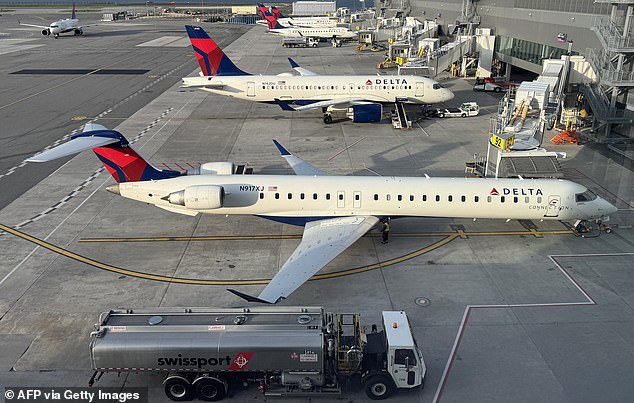
Chaos as 17 Airports Shut Down, Halting Flights for Hours
FAA Reduces Air Traffic to Ensure Safety Amid Government Shutdown
The Federal Aviation Administration (FAA) has taken a significant step to manage air traffic by reducing the number of flights by over 44,000 per day across 40 cities as the peak travel holiday season approaches. This decision comes in response to ongoing challenges caused by the government shutdown, which has led to major flight delays at airports nationwide.
The reduction of 10% in air traffic is aimed at maintaining safety and preventing further disruptions. With more than 44,000 flights daily, including commercial passenger flights, cargo planes, and private aircraft, the impact of this measure is expected to be widespread. The FAA's move highlights the growing concerns over staffing shortages, particularly among air traffic controllers who have been working without pay since the shutdown began on October 1.
Staffing Shortages Lead to Flight Delays
Air traffic controllers have faced significant pressure due to the shutdown, with some calling out of work, leading to staffing shortages during certain shifts. This has contributed to flight delays at numerous U.S. airports. FAA Administrator Bryan Bedford emphasized the urgency of the situation, stating, "We can't ignore it." He and Transportation Secretary Sean Duffy are set to meet with airline executives to determine how to safely implement the flight reduction.
Until the affected markets are officially announced, the FAA has not disclosed the specific cities that will be impacted. However, the list is expected to be released later in the week.
Travel Chaos and Extended Delays
The ongoing government shutdown has already created travel chaos across the United States. On Wednesday evening, at least 17 airports, ranging from San Francisco to Chicago and New York City, could experience delays of up to seven hours extending into early Thursday. The average wait time is expected to be around 2 hours and 20 minutes.
The affected airports include Newark (EWR), JFK, LaGuardia (LGA), Los Angeles (LAX), Atlanta (ATL), Chicago O'Hare (ORD), Miami (MIA), Dallas/Fort Worth (DFW), Houston (IAH, HOU), and Washington DC area (DCA, IAD, BWI). Additional airports such as San Francisco (SFO), Boston (BOS), Seattle (SEA), Denver (DEN), Orlando (MCO), and Salt Lake City (SLC) were also noted in the FAA alert.
To manage the heavy traffic with fewer controllers, the FAA has implemented a major airspace flow program, which controls and spaces out flights when air traffic capacity is limited. The agency warned that the current delays could last until at least 12:59am ET on Thursday.

Widespread Impact and Concerns
Flights heading to Phoenix Sky Harbor International Airport are also facing average delays of about three hours and 15 minutes due to unspecified causes, likely linked to nationwide air traffic control staffing shortages. This issue has become increasingly critical as the shutdown continues to affect operations across the country.
Wednesday marked the 36th day of the shutdown, making it the longest in U.S. history. The FAA reported that roughly 13,000 air traffic controllers and 50,000 TSA agents have been working without pay for weeks. Before the shutdown, the agency was already dealing with a shortage of about 3,000 air traffic controllers.
Transportation Secretary Sean Duffy warned that if the federal government shutdown continues for another week, it could lead to "mass chaos" and force the FAA to close parts of the national airspace to air traffic. This drastic measure could significantly disrupt American aviation.
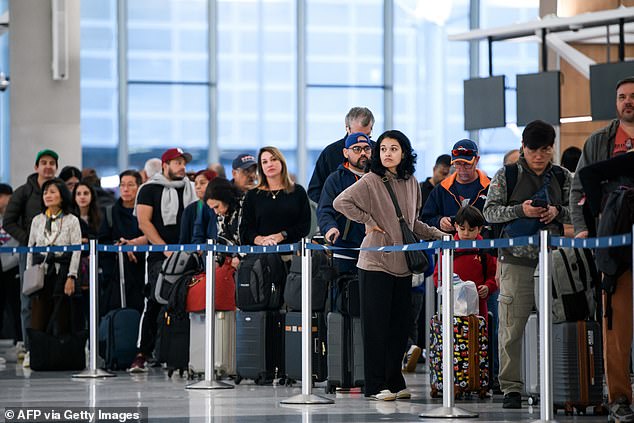
Pressure on Congress and Airlines
With the standoff in Congress over healthcare spending set to become the longest in history, both Trump's Republicans and the opposition Democrats face increasing pressure to end the crisis that has crippled public services. Airlines have repeatedly urged an end to the shutdown, citing aviation safety risks.
Shares of major airlines, including United Airlines and American Airlines, were down about one percent in extended trading. An airline industry group estimated that over 3.2 million passengers have been affected by flight delays or cancellations due to rising air traffic controller absences since the shutdown began on October 1.
Airlines have raised concerns with lawmakers about the impact on operations. While the shutdown has not significantly affected business, airlines have warned that bookings could drop if it continues. More than 2,100 flights were delayed on Wednesday.