England's Busiest Property Markets... and the Ones Where Nothing Sells
Market Harborough: The Busiest Property Market in England and Wales
Market Harborough, a charming market town in Leicestershire, has been identified as the busiest property market in England and Wales. This finding comes from exclusive data shared with This is Money, highlighting the town's exceptional activity in property transactions.
According to analytics firm PropertyData, the number of sales per 1,000 households was assessed between the summers of 2024 and 2025 to determine the busiest markets. The study analyzed transactions across 259 towns and cities in England and Wales, revealing significant variations in market activity.
Market Harborough recorded an impressive 54.3 transactions per 1,000 households annually, while Dagenham in East London saw only 19.2 sales per 1,000 households. This means a property in Market Harborough is more than two and a half times more likely to change hands than one in Dagenham.
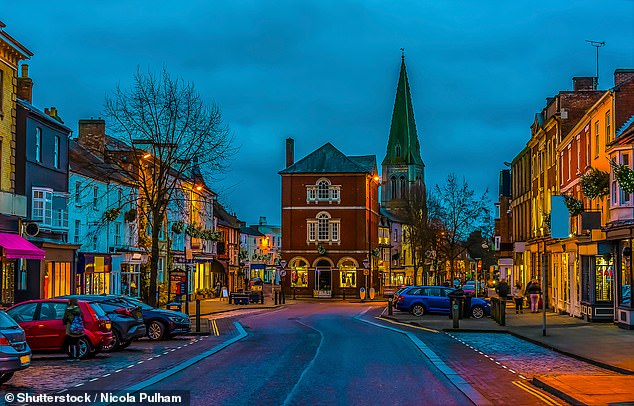
Nez Carey, a branch manager at estate agent Connells, describes Market Harborough as a booming market. He notes that the town offers everything people need, including good transport links, safety, quality schooling, and a strong community feel. The area also boasts a robust rental market and numerous new-build sites, making it an attractive location for investment.
Other towns experiencing high transaction rates include Beverley in East Yorkshire and Northwich in Cheshire. Beverley is known for its historic pubs, well-rated restaurants, and Beverley Minster, one of England’s most magnificent parish churches. Northwich, on the other hand, thrives with independent businesses, shops, and a monthly artisan market. It also hosts various festivals, adding to its appeal.
David Kennerley, branch manager at Swetenhams estate agents in Northwich, highlights the town's central location in Cheshire, offering good access to motorways and rail networks. The area features properties ranging from over a million pounds to more reasonably priced homes. Kennerley emphasizes the blend of traditional Edwardian architecture and modern developments, along with excellent schools, which attract a diverse range of buyers.
Where Is the Property Market Dead?
At the opposite end of the spectrum, Dagenham in East London recorded just 19.2 property transactions per 1,000 households. Rotherham in South Yorkshire and Dudley in the West Midlands are not much better, with just over 23 transactions per 1,000 households. Wolverhampton also saw only 23.9 transactions per 1,000 households over the year.
However, Wolverhampton has regeneration projects in the pipeline that could revitalize the market. The City Centre West development will include over 1,000 new homes and 70,000 square feet of retail and public spaces. Additionally, Canalside South, a waterfront development of 533 energy-efficient homes near Wolverhampton train station, is set to further boost the area.
Common Traits of the Busiest Locations
Despite their geographical differences, the busiest locations share several common traits. According to buying agent Jonathan Hopper, many of these towns fall into what he calls the "Goldilocks Zone." These areas offer prices 40 to 50 percent lower than London, with sub-60-minute commutes, making them ideal for those seeking better value post-pandemic.
Many of these areas also have a strong supply of new homes being built to meet buyer demand. For instance, St Neots, a mid-market town near Cambridge, offers affordable housing with quick links to London and numerous new developments. Developers often provide incentives to buyers, keeping sales buoyant even when national transaction volumes are subdued.
Hopper also notes that the increase in landlord sales, driven by tax and regulation changes or strategic portfolio management, has contributed to higher transaction numbers in some areas. Around 18 percent of current listings are former rentals, compared to a historical average of 10 percent.
Common Traits of the Deadest Locations
The quietest markets can be divided into two groups: those that have become unaffordable and those lacking major new housebuilding. High-value cities like Oxford and London face affordability issues, with many residents renting rather than buying. Older industrial towns like Rotherham and Dudley lack new supply and equity mobility, resulting in fewer household moves and less market churn.
Hopper believes we are witnessing a new take on the old two-speed property market. He explains that transactions are strongest where new housing supply meets realistic pricing. Landlord sales and first-time buyer interest have given affordable towns an extra boost, but the divide remains structural.
The fewer transactions could also be due to a lack of affluence in some towns. Among the 10 towns with the lowest property transactions per 1,000 households, two were listed on the latest English Indices of Deprivation 2025. Both Dagenham and Leicester feature among the top 10 most deprived local authority districts. A significant percentage of their populations live in income-deprived households, affecting market activity.