Europe's Bullet Trains Set to Revolutionize Travel
For many, a European city break typically involves choosing the most affordable destination and booking a return flight with airlines like Ryanair or easyJet. However, a groundbreaking initiative is now being introduced that could revolutionize how travelers move across the continent — without the need for a plane.
This ambitious project, spearheaded by the European Commission, aims to develop an advanced high-speed rail network across the EU. The goal is to provide better connectivity and significantly reduce travel times between major cities.
For instance, a current train journey from Bucharest to Budapest takes a grueling 15 hours. Under the new plans, this route will be cut down to just six hours. Imagine a Friday night in Berlin followed by a Saturday in Copenhagen — it's no longer a distant dream but a realistic possibility.
What Are the European Commission’s New Plans?
By 2040, the European Commission hopes to halve the duration of many popular rail journeys. This vision includes not only faster travel but also a more integrated transport system that offers a viable alternative to short-haul flights and long car trips.
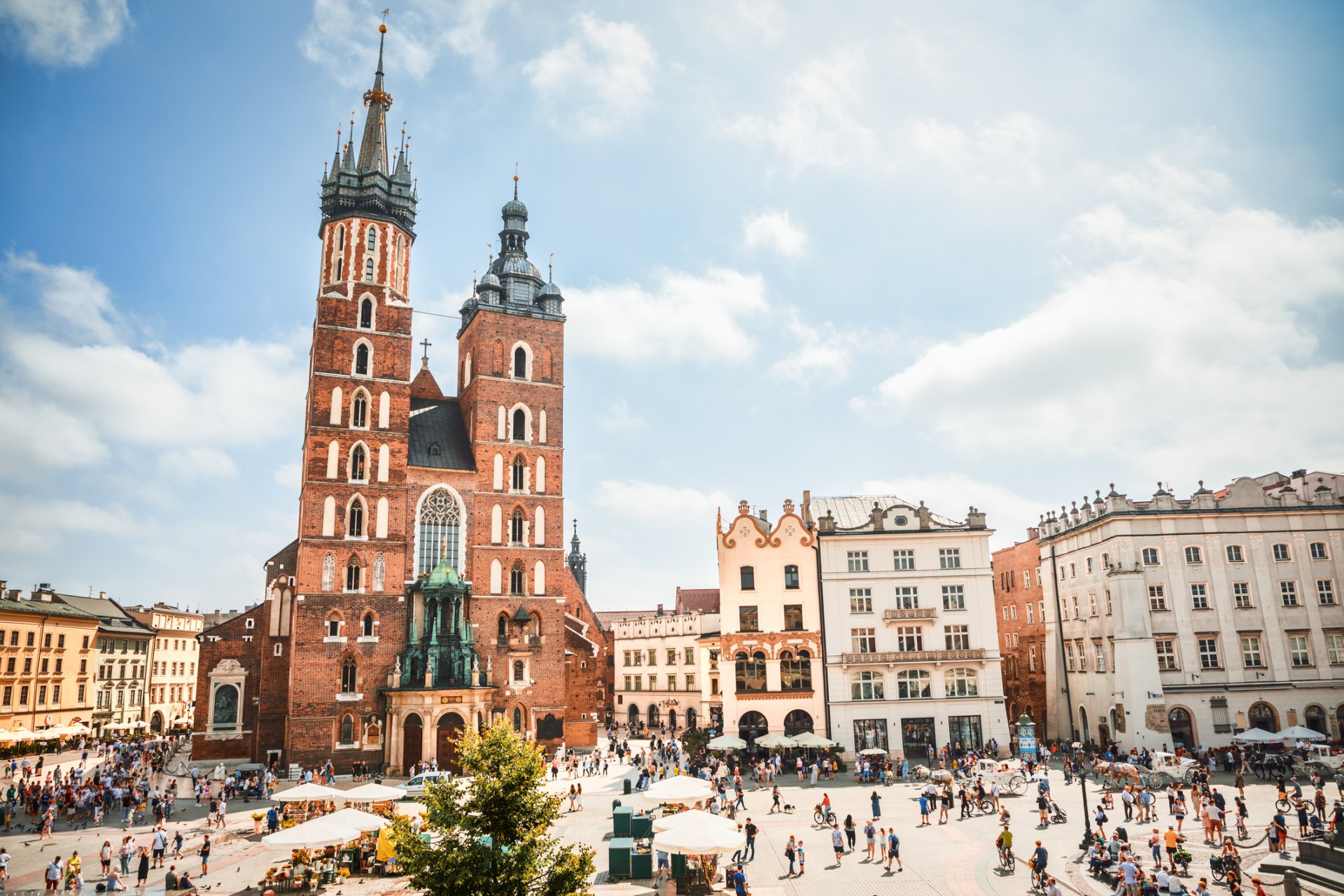
A competition is currently underway, offering one lucky reader the chance to win a five-day escorted tour to Krakow, Poland. This tour promises an unforgettable escape through the former royal capital, where history, culture, and striking architecture await at every turn. Explore the UNESCO-listed treasures of the Old Town, stroll along cobblestone streets, and experience the city’s unique charm.
The Commission’s website outlines its goals, stating that completing key rail links between major cities will give passengers a real alternative to short-haul flights and long car journeys.
Trains are set to travel at a speed of 200km/h (around 120mph), with routes capable of achieving speeds well above 250km/h (approximately 160mph) also identified. Commissioner for sustainable transport and tourism, Apostolos Tzitzikostas, emphasized that high-speed rail is about more than just reducing travel times. It’s about uniting Europeans, strengthening the economy, and leading the global race for sustainable transport.
Citizens across the Union will benefit from faster, safer, and more affordable journeys that bring Europe closer together.
However, the details on how this plan will be implemented remain unclear. There is limited information on funding, with estimates suggesting the project could cost between €345 billion and €546 billion. Jon Worth, an independent rail expert, pointed out that the document seems more like an aspirational statement rather than a concrete plan.
How Long Will the New Rail Network Take to Complete?
Officially, the network won’t be fully operational until 2040. However, the Commission has outlined several milestones:
- 2030: Passengers will be able to travel between Berlin and Copenhagen in 4 hours.
- 2030: New connections between the Baltic countries will be complete.
- 2035: Passengers will be able to travel from Sofia to Athens in 6 hours.
- 2035: New connections between Paris to Lisbon via Madrid will be complete.
How Much Quicker Will the Journeys Be?
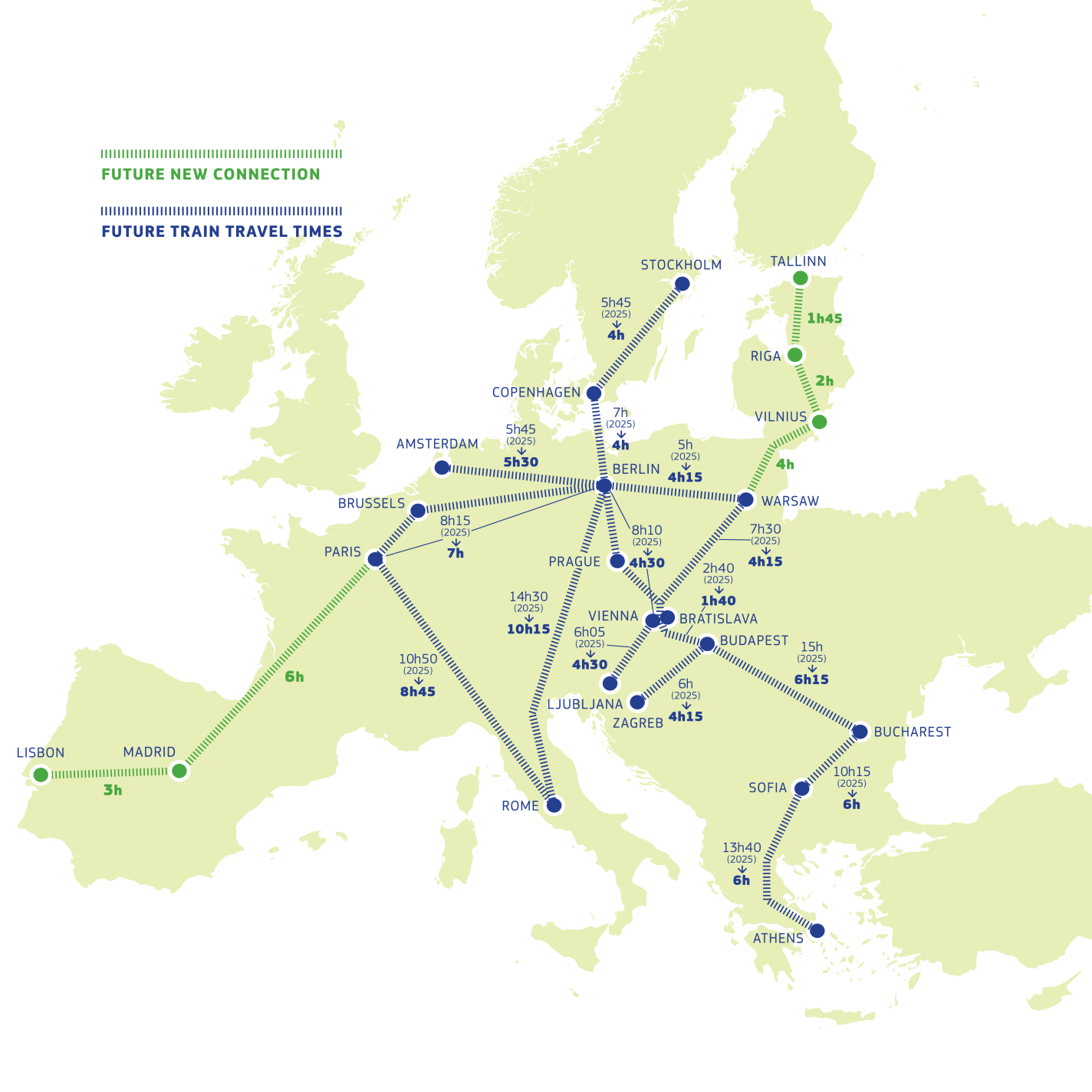
An impressive map from the European Commission highlights the significant improvements in journey times once the rail network is complete. Some of the key changes include:
- Paris to Rome: Current journey time: 10h 50mins. New journey time: 8h 45mins.
- Paris to Berlin: Current journey time: 8h 15mins. New journey time: 7h.
- Amsterdam to Berlin: Current journey time: 5h 45mins. New journey time: 5h 30mins.
- Berlin to Warsaw: Current journey time: 5h. New journey time: 4h 15mins.
- Berlin to Copenhagen: Current journey time: 7h. New journey time: 4h.
- Berlin to Vienna: Current journey time: 8h 10mins. New journey time: 4h 30mins.
- Copenhagen to Stockholm: Current journey time: 5h 45mins. New journey time: 4h.
- Prague to Rome: Current journey time: 14h 30mins. New journey time: 10h 15mins.
- Vienna/Bratislava to Ljubljana: Current journey time: 6h 05mins. New journey time: 4h 30mins.
- Warsaw to Bratislava/Vienna: Current journey time: 7h 30min. New journey time: 4h 15min.
- Bratislava/Vienna to Budapest: Current journey time: 2h 40mins. New journey time: 1h 40mins.
- Budapest to Zagreb: Current journey time: 6h. New journey time: 4h 15mins.
- Budapest to Bucharest: Current journey time: 15h. New journey time: 6h 15mins.
- Bucharest to Sofia: Current journey time: 10h 15min. New journey time: 6h.
- Sofia to Athens: Current journey time: 13h 40min. New journey time: 6h.
Will There Be Any New Routes?
Yes, the rail network will also offer brand new direct connections, such as:
- Paris to Madrid: 6h.
- Madrid to Lisbon: 3h.
- Warsaw to Vilnius: 4h.
- Vilnius to Riga: 2h.
- Riga to Tallinn: 1h 45mins.
How Can Travellers Buy Tickets?
Given that the entire network isn’t planned to be completed until 2040, it will take some time before tickets can be purchased for these routes. However, there are plans to make it easier for passengers to find and purchase tickets for journeys combining services from different operators.
The Commission also mentioned that they will increase passengers’ choice and digital access to all tickets, as well as make more rail tickets available on major ticketing platforms, including from smaller rail companies.
Will Any Other Transport Links Be Improved?
The Commission has also outlined plans to improve other transport links. By 2030, all large EU airports handling over 12 million passengers should be connected to long-distance or high-speed rail.
If you have a story to share, feel free to email LifestyleTeam@.co.uk.
Comment now
Add as a Preferred Source on Google
Add as preferred source
For even more unmissable travel news, features, and inspiration in your inbox each week, sign up to 's The Getaway newsletter.
