Fossil Fuel Lobbyists Outnumber Most Delegations at COP30 in Brazil
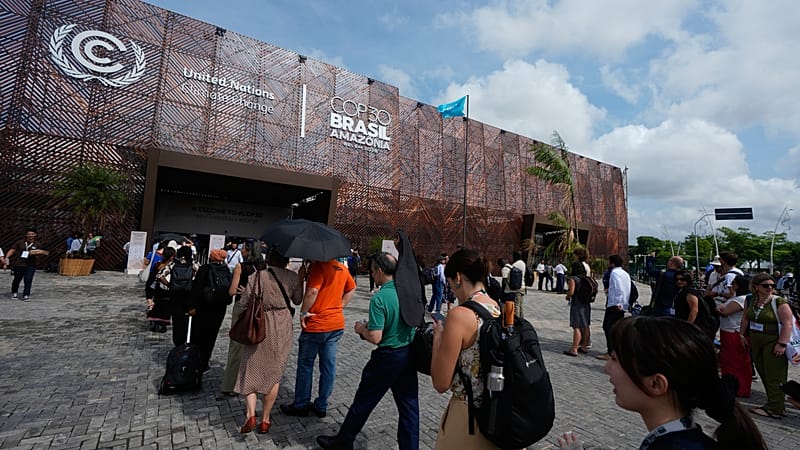
The Presence of Fossil Fuel Lobbyists at COP30
According to a recent analysis by the Kick Big Polluters Out (KBPO) coalition, one in every 25 attendees at COP30 is a fossil fuel lobbyist. This finding highlights the significant influence of the fossil fuel industry within the UN climate summit. The analysis revealed that over 1,600 fossil fuel lobbyists have been granted access to the talks in Belém, Brazil, outnumbering almost every country delegation. Only the host country, Brazil, has a larger delegation with 3,805 participants.
The number of fossil fuel lobbyists at COP30 represents a 12% increase from last year’s climate talks in Baku, Azerbaijan, marking the highest concentration of such representatives since the coalition began tracking them in 2021. While the overall number of fossil fuel representatives is slightly lower than at COP29, the proportion is higher due to a smaller total attendance at this year's conference.
Defining a Fossil Fuel Lobbyist
For its analysis, the KBPO coalition relies on the provisional list of COP30 participants published by the UNFCCC on 10 November. A fossil fuel lobbyist is defined as any delegate who represents an organization or delegation aiming to influence climate policy in favor of the fossil fuel industry or specific companies within it. This includes financial representatives from institutions that have provided major funding to fossil fuel companies since the Paris Agreement was signed.
Fossil Fuel Lobbyists Outnumber Delegates from Vulnerable Nations
The analysis found that fossil fuel lobbyists outnumber official delegates from the Philippines by a ratio of 50 to 1, despite the country being hit by devastating typhoons during the climate conference. Jax Bonbon from IBON International in the Philippines criticized the presence of these lobbyists, stating that they are given a platform to promote false solutions that sustain their profit motives while undermining genuine climate action.
The situation is similar for other vulnerable nations, such as Jamaica, which is still recovering from Hurricane Melissa, a storm intensified by climate change. There are 40 times more fossil fuel lobbyists than attendees from Jamaica. Overall, fossil fuel lobbyists received two-thirds more passes for COP30 than all of the delegates from the 10 most climate-vulnerable nations combined.
Origins of Fossil Fuel Lobbyists
Major trade associations are the primary vehicles for fossil fuel influence at COP30, according to the KBPO coalition. The International Emissions Trading Association brought 60 representatives, including delegates from oil and gas giants like ExxonMobil, BP, and TotalEnergies.
COP30 is the first of these annual UN climate talks where non-government participants are expected to publicly disclose their funding sources and confirm their objectives align with those of the UNFCCC. However, this requirement does not apply to those attending with government badges. The KBPO coalition sees this as a concerning oversight, as 164 fossil fuel lobbyists gained access through government badges.
Transparency International’s research found that 54% of participants in national delegations either did not disclose their affiliations or selected vague categories like “Guest” or “Other.” Several national delegations, including Russia, Tanzania, South Africa, and Mexico, failed to disclose the affiliations of any of their delegates holding a Party badge.
EU Countries and Fossil Fuel Representatives
An open letter from Fossil Free Politics to Climate Commissioner Wopke Hoekstra earlier this year urged the EU to protect the UN climate talks from fossil fuel influence. The EU appears to have taken note, as the only people in its delegation who are not from an EU institution or its advisors were three journalists and film-makers.
Germany and Austria also committed ahead of COP30 not to bring fossil fuel lobbyists to the talks. However, other EU Member States brought 84 lobbyists into the UN climate conference in their official delegations, according to a detailed analysis by Fossil Free Politics in collaboration with the KBPO coalition.
France brought 22 lobbyists, including five from TotalEnergies, such as CEO Patrick Pouyanné. In October, a Paris court ruled that TotalEnergies had misled consumers in its advertising by giving the impression that it is part of the solution to climate change despite continuing to promote and sell more fossil fuels.
Sweden had the next largest fossil fuel delegation with 18, and Italy brought 12 lobbyists. Other EU countries, such as Denmark, Belgium, and Portugal, brought 11, 8, and 8 lobbyists respectively. Finland brought 2, and the Netherlands and Greece brought 1 each.
Accountability and Reform at UN Climate Talks
A report from Transparency International highlighted how fossil fuel interests shape the UN climate negotiation process, from foundational rules to outcomes of COP meetings. Brice Böhmer, climate and environment lead at Transparency International, called for the review and strengthening of participant disclosure rules to ensure integrity and accountability at future summits.
The report also recommends excluding representatives from the fossil fuel industry entirely from national delegations. Lien Vandamme, senior human rights and climate change campaigner at the Center for International Environmental Law (CIEL), emphasized the urgent need to reform the rules of climate negotiations. She called for measures such as allowing voting when consensus is weaponized, adopting enforceable conflict-of-interest rules, and protecting civic space and human rights to accelerate the phaseout of fossil fuels.
