Gulf Stream Near Collapse, Key 'Fingerprint' Revealed
The Gulf Stream and the Atlantic Meridional Overturning Circulation (AMOC)
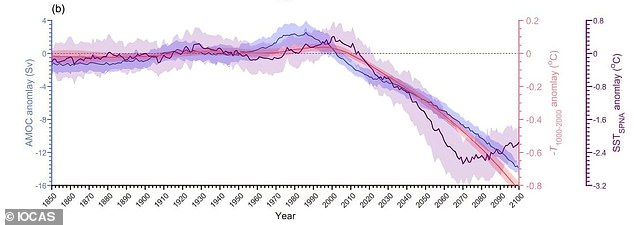
Scientists have raised concerns that the Gulf Stream, a crucial component of the Atlantic Meridional Overturning Circulation (AMOC), may be on the brink of collapse. This could lead to severe consequences for the northern hemisphere, potentially plunging it into a new ice age. Researchers from China and San Diego have discovered a 'key fingerprint' beneath the ocean's surface, indicating that the AMOC has been weakening for decades.
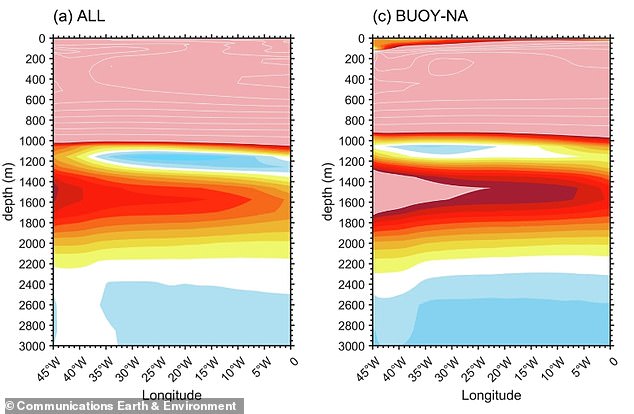
The 'distinctive temperature fingerprint' is found at mid-depth – between 3,280ft to 6,560ft (1,000-2,000 metres) below the ocean's surface – and it suggests that a collapse could occur later this century. While the Gulf Stream is a small part of the broader AMOC system, it plays a vital role in transporting warm water from the tropics to the northern hemisphere, keeping Europe, the UK, and the US east coast relatively mild.
The Role of the AMOC
The AMOC is often referred to as 'the conveyor belt of the ocean.' It moves warm water near the ocean's surface northwards from the tropics to the northern hemisphere. When this warm water reaches the North Atlantic, it releases heat and freezes. As ice forms, salt is left behind in the ocean water, making it denser and causing it to sink. This dense, salty water then flows southwards towards the tropics, eventually rising again through a process called upwelling, completing the cycle.
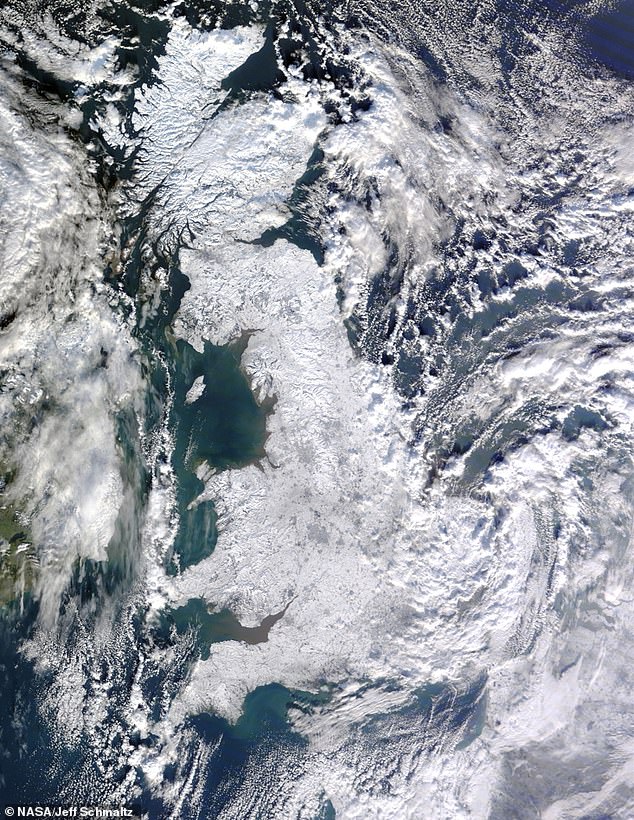
Climate scientists agree that the AMOC brings enough warmth to the northern hemisphere to keep it relatively mild. If it were to slow down or collapse, large parts of Europe and North America could face a deep freeze. Some predictions suggest that parts of the UK could experience temperatures as low as -30°C.
The Science Behind the Discovery
To understand the changes in the AMOC, researchers analyzed past observational data, climate models, and ocean simulations to track its strength over the next 75 years. They identified a 'observationally detectable fingerprint' in the North Atlantic Ocean's mid-depth, where temperatures were found to be unusually warm. This warming signal indicates that the AMOC slowdown is already underway.
The study, published in Communications Earth & Environment, highlights the importance of mid-depth temperature variations as a more reliable indicator of the AMOC's strength than surface temperatures, which are influenced by atmospheric variability.
Implications of an AMOC Collapse
If the AMOC collapses, it could lead to dramatic regional climate changes. Northern Europe might experience extreme cooling of up to 15°C, with winter temperatures becoming more akin to those of Arctic Canada. Rainfall and weather patterns across the tropics and subtropics would also shift, intensifying in some areas and decreasing in others.
Experts warn that without the AMOC, the climate of northwest Europe could become unrecognizable compared to what it is today. Winters would be significantly colder, and precipitation levels could decrease, posing serious threats to life and agriculture.
The Impact of Global Warming
Global warming is accelerating the melting of glaciers, particularly in Greenland, which contributes to an influx of freshwater into the North Atlantic. This freshwater disrupts the AMOC by reducing the salinity and density of the water, slowing down the entire circulation system.
The engine of the AMOC lies off the coast of Greenland, where the melting of ice due to climate change introduces more freshwater into the North Atlantic. This process slows down the entire system, raising concerns about its long-term stability.
What Lies Ahead?
As the AMOC weakens, the potential for a new ice age looms large. Scientists continue to monitor the situation closely, using advanced models like the Massachusetts Institute of Technology General Circulation Model (MITgcm) to simulate the effects of an AMOC slowdown. These models help trace how signals related to the AMOC spread across the ocean, revealing critical insights into future climate scenarios.
With the evidence pointing toward a possible collapse, the scientific community is urging further research and action to mitigate the risks associated with a destabilized AMOC. The implications for global climate systems are profound, and the need for understanding and addressing these changes has never been more urgent.
