Has China's Carbon Emission Peak Arrived? New Data Reveals No Rise in 18 Months
China's Emissions Trends and Climate Progress
China, the world’s largest polluter by total annual emissions, has long relied heavily on coal for energy, accounting for 30 per cent of global emissions. However, recent developments suggest a shift in this trend.
A new analysis reveals that China’s emissions have remained flat or declined over the past 18 months. This marks a significant turning point in the country’s environmental trajectory.
Key Findings from the Analysis
The analysis, conducted by the Centre for Research on Energy and Clean Air (CREA) and published on Carbon Brief, indicates that China is well on its way to reducing greenhouse gas emissions. The data shows that starting from March 2024, emissions were either flat or falling. Even as electricity demand grew from July to September, power-sector carbon dioxide emissions remained stable.
If this pattern continues, China could see a decline in carbon dioxide emissions for the entire year of 2025. Lauri Myllyvirta, lead analyst at CREA, highlights the symbolic significance of these changes, noting that while a 1 per cent fluctuation may seem minor, it represents a shift in policy direction.
Industry Contributions to Emission Reductions
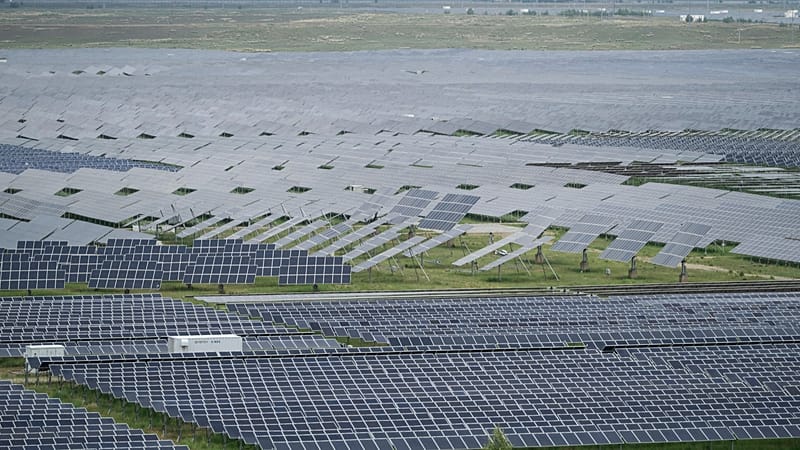
Several industries have played a crucial role in this progress. Solar and wind power deployment has been instrumental in meeting growing energy demands without increasing emissions. In the first nine months of 2025, China added 240 gigawatts (GW) of solar and 61 GW of wind capacity, setting the stage for another renewable record in 2025.
Solar electricity generation increased by 46 per cent in the third quarter of 2025, while wind energy grew by 11 per cent. The rapid adoption of electric vehicles (EVs) also contributed to a 5 per cent reduction in transport fuel emissions year-on-year.
Emissions from the cement, metal, and steel industries fell during the third quarter of 2025, with reductions of 7 per cent and 1 per cent respectively. Steel production emissions also declined. Additionally, oil demand and emissions in the transport sector fell by 5 per cent.
However, the expansion of the chemical industry led to a 10 per cent increase in emissions due to surges in plastic and other chemical production, offsetting some of the gains.
Future Outlook and Climate Commitments
Looking ahead, China recently submitted its Nationally Determined Contribution (NDC) for 2035, pledging to reduce economy-wide net greenhouse gas emissions by 7 to 10 per cent from their peak. Although Chinese President Xi Jinping did not attend the leaders’ summit at COP30, a delegation was present for the talks.
COP30 President André Corrêa do Lago praised China’s climate commitments, stating, “China is coming up with solutions that are for everyone, not just China.” He highlighted the competitiveness of solar panels compared to fossil fuels, emphasizing their widespread use.
A new UN analysis published on Monday found that countries' climate pledges could lead to a 12 per cent reduction in emissions by 2035. This figure reflects progress from the previous 10 per cent reduction announced on 28 October.
UN climate chief Simon Stiell called the new figure a “big deal,” noting that every fraction of a degree of heating avoided will save millions of lives and billions of dollars in climate damage.
Conclusion
China’s efforts to reduce emissions and transition to cleaner energy sources are gaining momentum. While challenges remain, the country’s commitment to climate action and its ability to underpromise and overdeliver on its goals offer hope for a more sustainable future.
