HDB Constructs 92,000 Flats for 284,000 Residents — Locations Revealed
New HDB Neighbours: A Growing Presence in Singapore
Singapore's Housing & Development Board (HDB) has released its annual report, offering insights into the country’s housing landscape. While much of the attention has focused on financial figures and deficits, a closer look reveals an interesting trend: the rapid pace at which new public flats are being built and the areas that will experience the most growth in the coming years.
According to the report, there are currently 91,941 new public flats under construction across Singapore. In addition, another 55,000 units are set to be launched over the next two years. With an average household size of 3.09 people, these new homes could accommodate up to 284,000 Singaporeans in the near future.
Central Areas See Significant Development
While large-scale construction projects are often associated with the outskirts of the city, the reality is that many of these developments are happening close to the central areas. Tengah, the new flagship town in the west, ranks second after the Kallang/Whampoa region. Nearly 11,500 new apartments are being constructed just a short distance from Orchard Road or Marina Bay.
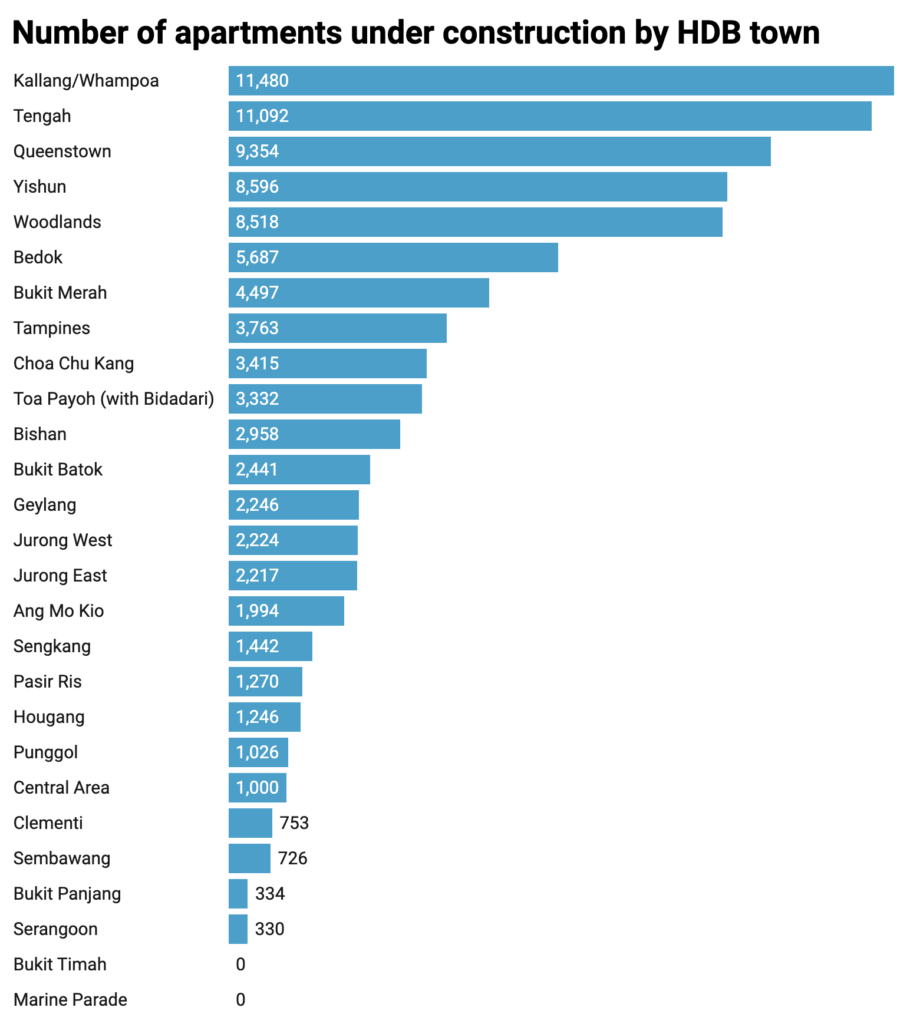
Queenstown is another area seeing significant growth, with over 9,300 new homes being built. Bukit Merah is adding another 4,500 units, while Punggol, Sembawang, and Serangoon are also receiving smaller but notable numbers of new apartments. These numbers highlight how development is spreading across the island, not just in the periphery.
Changing Dynamics of Population Growth
The idea that these new apartments will bring in a large influx of new residents might be misleading. The average household size in Singapore has been shrinking, meaning that the number of people living in HDB flats hasn’t increased as rapidly as the number of units.
This shift is driven by changing lifestyles, where both young and elderly individuals are choosing to live independently rather than with their families. As a result, many of the new homeowners may simply be current residents moving out of their existing homes.
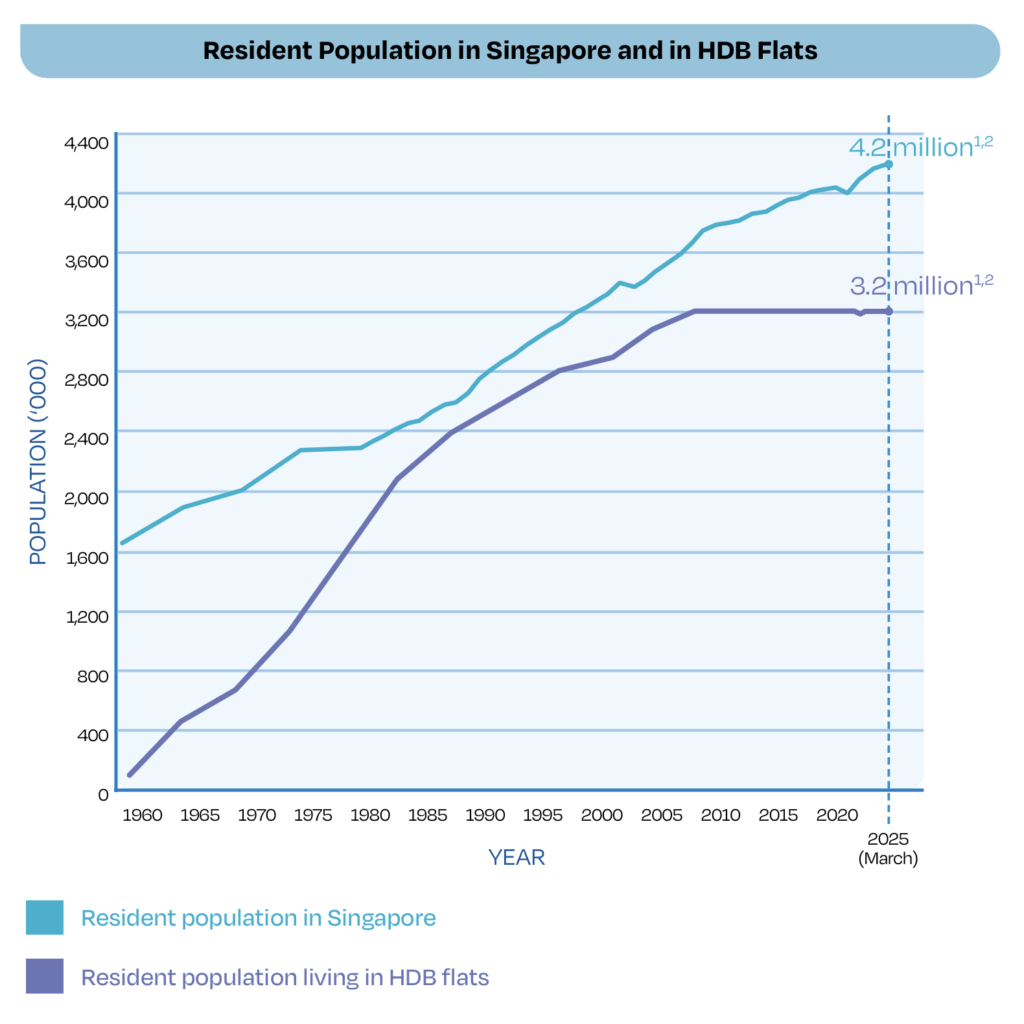
Over the past 15 years, the number of residents in HDB apartments has remained relatively stable despite population growth. This suggests that the impact on public infrastructure and transportation may not be as significant as expected. In some cases, traffic patterns could shift, with areas people move away from becoming less crowded and those they move into becoming busier.
Private Housing Takes the Lead
While HDB flats remain a key part of Singapore’s housing landscape, it is private housing that contributes more to population density. More residents are opting for condominiums, either due to affordability or lifestyle preferences.
As household sizes continue to shrink, HDB apartments are likely to become more comfortable. With fewer people per unit, there may be more space available and potentially better neighbourly relations.
Conclusion
The expansion of HDB housing reflects broader societal changes in Singapore. While the number of new flats is increasing, the way people live and the reasons behind their choices are shaping the housing market in unique ways. Understanding these trends is essential for anticipating future developments and planning accordingly.
