HKU 'Pursuing Plan' to Launch Campus in Saudi Arabia
Hong Kong University Expands into Saudi Arabia
The University of Hong Kong (HKU) is exploring the possibility of establishing a campus in Saudi Arabia, according to recent reports. This move comes as part of the university’s broader strategy to expand its presence globally, with plans already underway for a campus in Spain.
Sources have indicated that HKU sees significant potential in the Middle East, particularly in Riyadh. While no official timeline has been set, the project is still in its early stages. The university is currently evaluating several locations within the kingdom, including areas like Diriyah, though it has since abandoned that particular idea.
A representative from HKU mentioned that the proposed Saudi campus could be larger than the one being developed in Spain. The focus of the new campus is expected to include business-related courses. According to insiders, this initiative could provide Saudi Arabian students with internship opportunities in mainland China through Hong Kong.
Additionally, the expansion is seen as an opportunity to capitalize on the growing relationship between the Middle East and Hong Kong. HKU aims to accelerate its international outreach, and the new campus could play a key role in this effort.
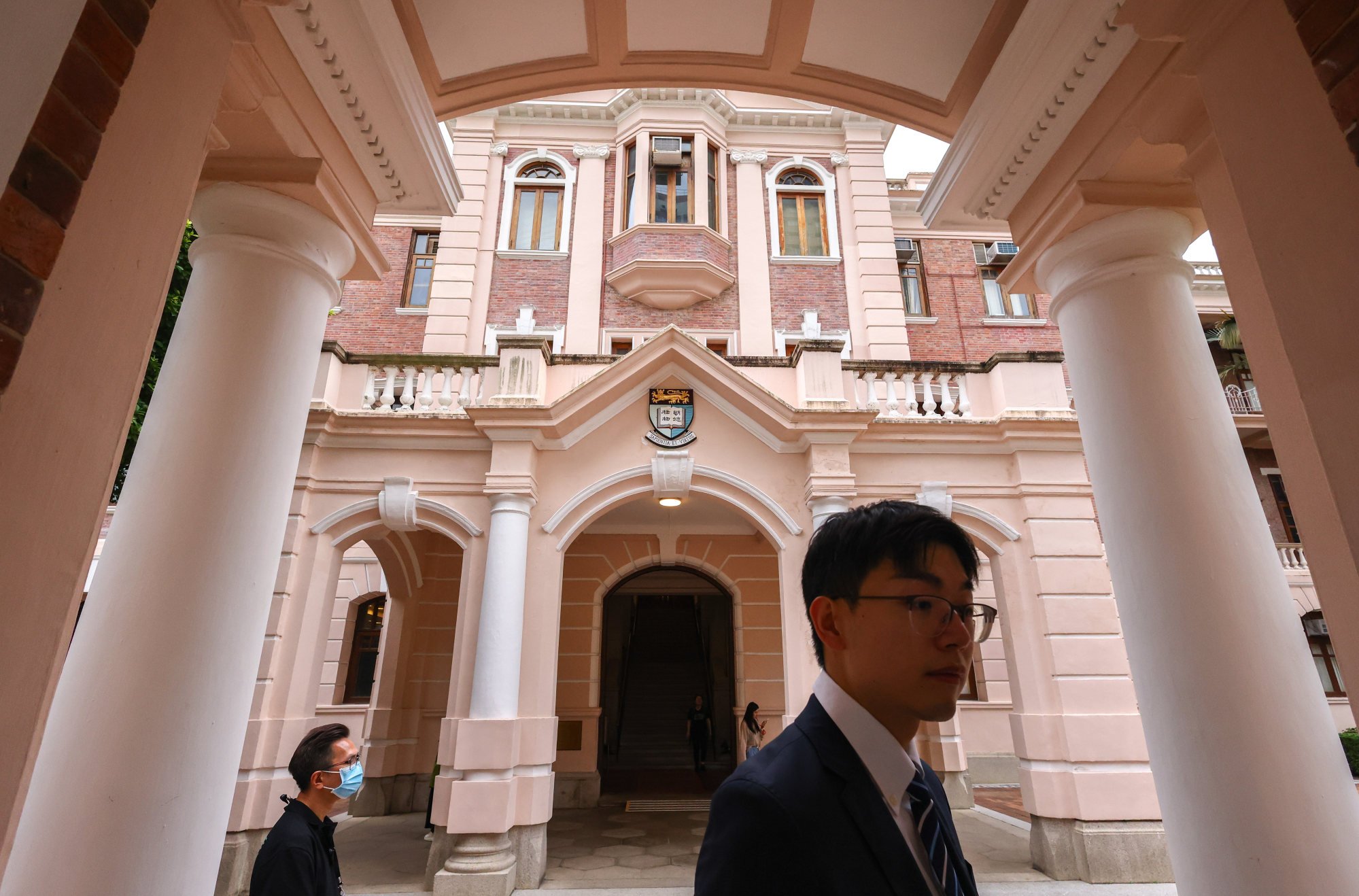
An HKU spokesperson stated that more details about the expansion would be shared in the future. “We will be sure to share it with you once it is available,” the spokesperson added.
This is not the first time HKU has taken steps to expand internationally. Earlier this year, the university reportedly acquired a property in Barcelona as part of its plan to establish its first overseas campus outside Hong Kong and the mainland.
Expert Opinions on Expansion
Professor Lau Chi-pang, a member of the Legislative Council’s education panel and special adviser to Lingnan University’s president, expressed support for HKU’s decision to expand into the Middle East. He highlighted the university’s strong reputation and its appeal to local students aiming to enter the mainland market.
Lau also noted that for students from Muslim countries, studying in Hong Kong may present challenges due to the city’s lack of a Muslim-majority environment. He suggested that while Singapore might be more Muslim-friendly, Hong Kong’s close ties with the mainland and its role in the Greater Bay Area offer unique advantages.
He further pointed out that the Middle East represents a promising market for Hong Kong universities, given the region’s affluence and ability to afford tuition fees.
Political scientist Chan Wai-keung, a lecturer at Polytechnic University, echoed these sentiments. He believed that HKU’s expansion aligns with China’s policy of strengthening ties with Belt and Road countries. Chan also noted that Hong Kong’s education sector has gained recognition in Saudi Arabia, citing the appointment of former HKUST president Tony Chan Fan-cheong to lead King Abdullah University of Science and Technology.
Global Recognition and Future Plans
HKU continues to strengthen its global standing, recently rising to 11th place in the QS World University Rankings. This marks a significant improvement from its previous positions of 17th and 26th.
In addition to its expansion efforts, HKU is adopting a “centre approach” to enter overseas markets. This includes existing study centres in Shanghai and a newly renovated centre in Spain, which is expected to become operational soon.
Other Hong Kong universities are also exploring similar opportunities. HKUST, for example, is reportedly looking into acquiring properties abroad to establish branch campuses.
Broader Implications for Hong Kong
Legislator Tang Fei, chairman of the Legco subcommittee on promoting Hong Kong as an international education hub, welcomed HKU’s expansion plans. He emphasized the importance of fostering closer cooperation with foreign institutions.
Tang suggested that offering exchange programs to Hong Kong undergraduates could help broaden their perspectives. “Hongkongers also need to develop and widen our international perspectives,” he said. He noted that many people still hold outdated views about Saudi Arabia, often associating it only with deserts.
As HKU moves forward with its ambitious expansion plans, the implications for Hong Kong’s education sector are significant. The university’s efforts reflect a broader trend of Hong Kong institutions seeking to strengthen their global presence and contribute to the region’s development as an international education hub.
