Inspectors Check Residents' Trash to Ensure Proper Recycling
San Diego's New Recycling Initiative: A Closer Look
Residents in San Diego, California, are witnessing a new approach to waste management as the city intensifies its efforts to improve recycling practices. The initiative involves teams of Compliance Officers, often referred to as 'lid lifters,' who inspect garbage cans early in the morning before trash collection begins. This effort is part of a broader strategy to ensure that residents properly sort their recyclables and organic waste.
The program was launched following the passage of Senate Bill 1383 (SB 1383) by the California State Senate. This law introduced a new organic waste recycling program aimed at reducing the amount of organic waste sent to landfills. The goal is to significantly cut down on methane emissions, which contribute to climate change.
Rather than issuing citations for violations, the city has opted for a more educational approach. If a resident fails to sort their waste correctly, an 'oops' tag will be placed on the bin, notifying the owner of the mistake. Some bins may also have a 'do not collect' sticker, requiring homeowners to manually sift through their trash and contact the city for a new pickup.
The lid lifters are not required to sift through the contents of the bins. Their role is limited to inspecting what they can see after opening the lids. City Waste Reduction Program Manager Alexander Galasso emphasized the importance of proper waste sorting, stating, "Waste doesn’t end when you come to the trash can. There is a life after waste and we want to make sure that these are sorted correctly, because not only does it impact our staff and trucks, but it impacts what goes into our landfill."
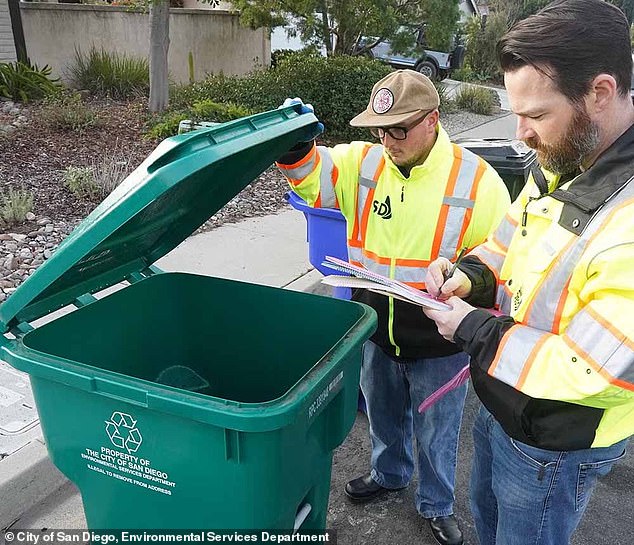

There are 12 inspectors who will work from 6:00 a.m. to 8:00 a.m. on weekdays. Notably, the city is not hiring any new employees for this initiative. Instead, Compliance Officers from the Environmental Services Department are taking on the additional task of conducting these inspections.
Galasso expressed his enthusiasm for the program, saying, "I’m weird, I’m excited. I think it’s cool to dig through trash. But I’m not the normal person." His comments highlight the unique nature of the initiative, which focuses on promoting and educating residents about proper waste disposal.
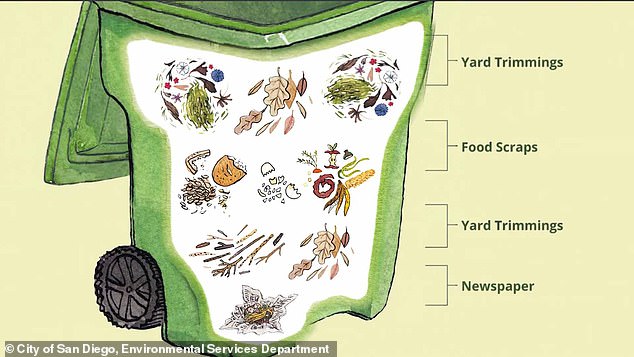
Organic waste, including food scraps, food-soiled paper, yard waste, and non-hazardous wood waste, should be placed in the green bins. Since 2021, California has implemented separate bins for organic waste to reduce pollutants in landfills. Organic waste can release harmful gases into the atmosphere, contributing to climate change.
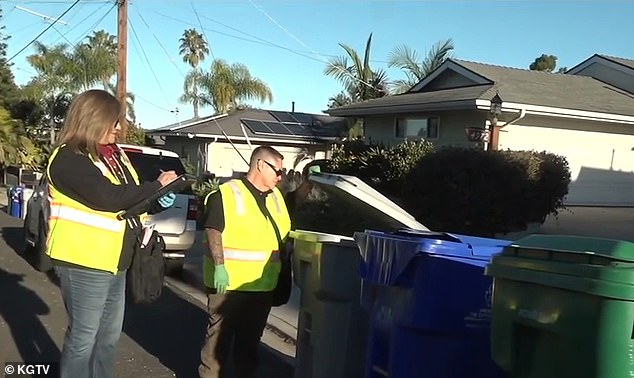
Recyclable materials such as aluminum and steel bottles and cans, aluminum foil and trays, glass bottles and jars, cardboard, paper cartons, plastic bottles, and Styrofoam should be placed in the blue bins. Other trash can be placed in the black bins.
Julie Sands, the city's recycling program manager, explained that the initiative is primarily an educational campaign. She told the San Diego Union-Tribune, "That kind of behavior change doesn’t just happen overnight. We’re in the middle of it right now." Every home participating in the city's trash service will be inspected once a year.
This initiative is part of San Diego's broader goal to become a zero-waste city. By encouraging proper waste sorting and raising awareness, the city hopes to create a sustainable future for its residents.
