Key insights from Day 1 of Singapore Fintech Festival
Tokenisation: A New Era in Digital Money
Tokenisation is emerging as a pivotal force in shaping the future of digital money systems. As businesses, fintechs, and regulators come together to explore new possibilities, there is a growing consensus on the need for strategic alignment to ensure that the benefits of these transformative technologies are fully realised while maintaining trust and security within the global financial system.
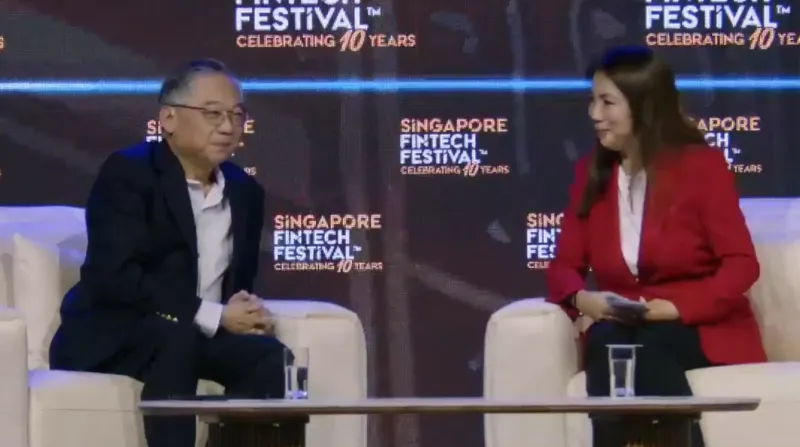
The Singapore Fintech Festival 2025 (SFF) on 12 November provided a platform for discussions on how technology is redefining finance. Here are five key insights from the event:
Regulators Must Keep Pace with Digital Transformation
One of the central themes at SFF 2025 was the urgent need for regulators to align with the rapid digital transformation taking place in the banking sector. According to the Global Financial Technology Network (GFTN), Asian regulators must accelerate their efforts to keep up with the innovations introduced by technologies such as AI, blockchain, and decentralised finance (DeFi).
Dr. Axel Weber, International Advisory Board Member, GFTN & President, Centre for Financial Studies, highlighted the importance of creating a safe space for experimentation under supervision. He emphasized that regulatory intervention may be necessary when needed.
As fintechs push the boundaries of what’s possible, traditional banks are investing heavily in digital platforms, automation, and machine learning to enhance customer experiences and streamline operations. However, many regulatory frameworks in Asia have struggled to keep pace with these advancements.
Dynamic regulatory approaches are essential to balance innovation with consumer protection. The festival also showcased how neobanks and traditional lenders are moving beyond app-based services to ‘invisible finance’, where payments, credit, and savings functions are integrated directly into consumer devices and everyday platforms. This shift, known as Banking-as-a-Service (BaaS) 2.0, positions banking infrastructure to operate in the background of digital ecosystems.
Emma Hagan, CEO of ClearBank UK, noted that neobanks rely on fast, resilient systems to stay competitive. “As soon as payments slow, the customer experience suffers—and that makes it hard to compete,” she said.
Collaboration is Key for AI Growth
United Overseas Bank Deputy Chairman and CEO Wee Ee Cheong stressed the importance of creating a collaborative framework between banks, fintechs, and regulators when it comes to AI integration in finance. “Speed without security is fragile. Only trust will build relationships that last,” he said at SFF 2025.
AI-driven technologies face scepticism due to concerns around trust, security, and transparency. To address this, the industry must agree on standards governing AI usage. From ensuring ethical application to addressing data privacy and model bias, these issues are central to the push for more intelligent financial systems.
With the rise of generative AI tools, ensuring reliability and transparency is crucial to building trust with consumers and regulators. Creating a regulatory framework that aligns the interests of all stakeholders will be pivotal in shaping a sustainable future for AI in finance.
Singapore Expanding Its Digital Economy Strategy
Another major insight from SFF 2025 was Singapore’s aggressive pursuit of digital economy partnerships within ASEAN and global blocs. Deputy Prime Minister and Minister for Trade and Industry Gan Kim Yong mentioned that Singapore is exploring cooperation between ASEAN and major blocs such as the EU, CPTPP, and GCC.
“A future ASEAN-EU digital economy agreement could be a major breakthrough, though it will take time,” he said.
The festival also highlighted the growing importance of digital trade agreements and cross-border regulatory cooperation. In this spirit, the Monetary Authority of Singapore (MAS) and the UK’s Financial Conduct Authority (FCA) launched a first-ever artificial intelligence in finance collaboration. This partnership aims to enhance cross-border opportunities for financial institutions and AI firms.
AI’s Role in Financial Inclusion
A recurring theme at SFF 2025 was AI’s expanding role in enhancing financial inclusion. Sumitomo Mitsui Banking Corporation (SMBC) shared its initiative to roll out AI-powered tools to assist CFOs in streamlining financial operations and promoting financial inclusion, particularly in underserved regions.
By automating financial processes and providing data-driven insights, AI is helping businesses and individuals in emerging markets access more personalised and efficient financial services. Executives from Mastercard, DBS, Swift, Ant International, and SMBC also highlighted that AI-driven cyberattacks, deepfakes, data breaches, and algorithm failures—rather than financial losses—are the biggest threats, potentially undermining trust and institutional stability.
In particular, AI’s application in fraud detection, liquidity management, and financial planning is opening up new opportunities for smaller businesses and individuals to engage with the global financial system.
Tokenisation Shaping the Future of Digital Money
A highly anticipated session at the festival focused on tokenisation as the next frontier in digital money. Finance leaders noted that there is still a lack of interoperability between traditional financial infrastructure and emerging digital money systems, with stablecoins seen as a potential solution.
“The buzz has always been around stablecoins,” said Naveen Mallela, Global Co-head of Kinexys at J.P. Morgan, “but stablecoins are just one of the options that you have.”
The rise of stablecoins, deposit tokens, and tokenised assets has transformed the definition of “money,” forcing banks, payment networks, and regulators to rethink liquidity, interoperability, and compliance frameworks.
Mishal Ruparel, Chief Commercial Officer at Banking Circle, said the next phase of digital money is about interoperability—the ability to move value instantly across networks and borders. “Clients increasingly ask how digital assets like stablecoins and tokenised deposits can provide real-time payments in an instant, 24/7, with absolute clarity,” he said.
As tokenisation continues to evolve, its potential to create a more liquid, efficient, and transparent financial ecosystem cannot be overstated. It is set to play a key role in the future of digital money, enabling seamless transactions that could revolutionise the way assets are transferred and traded on a global scale.
