'Mamma Mia!': Shock as Carbonara in a Can Hits Singapore Markets
The Controversy Surrounding Canned Carbonara
Italians are once again up in arms over what they see as a betrayal of their culinary heritage. This time, the issue is the release of Heinz’s canned spaghetti carbonara, which has sparked outrage across the country. The product, described as “pasta in a creamy sauce with pancetta,” is set to hit UK supermarkets with a price tag of £2 (€2.37). For many Italians, this move represents a significant insult to their beloved cuisine.
A Dish in Question
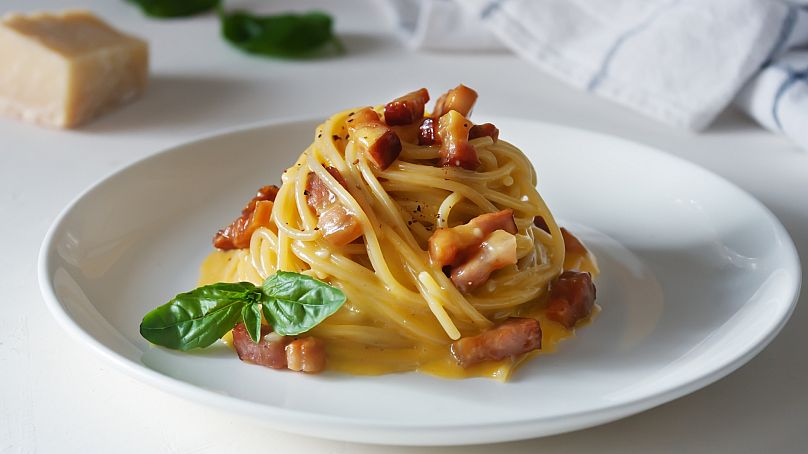
Carbonara, one of Italy’s most iconic dishes, has long been a subject of debate among chefs and food enthusiasts. According to traditional Italian recipes, carbonara should consist of just five ingredients: pasta (usually spaghetti or bucatini), guanciale, pecorino romano cheese, egg yolks, and black pepper. However, Heinz’s version includes pancetta and cream, which some argue deviates from the original recipe.
Alessandro Pipero, a Michelin-starred chef in Rome, has criticized the canned product, calling it “cat food.” His comments reflect the sentiments of many Italians who feel that the dish is being disrespected by commercialized versions that prioritize convenience over authenticity.
The Origins of Carbonara
The history of carbonara is more complex than many realize. While it is often considered a quintessentially Italian dish, its origins may not be as straightforward. Food history professor Alberto Grandi notes that carbonara is less than a century old. One popular theory suggests that it was created in 1944 by an Italian Army cook named Renato Gualandi, who combined elements of pasta gricia—a dish without eggs—with ingredients available to American soldiers at the time, including powdered egg yolks.
Interestingly, the earliest known recipe for carbonara appeared in a 1952 Chicago cookbook, which used bacon instead of guanciale. This raises questions about the dish’s true origins and whether it can be claimed exclusively as an Italian creation.
Cultural Identity and Culinary Evolution
Despite these historical nuances, many Italians remain fiercely protective of their culinary traditions. They argue that carbonara’s authenticity lies in its use of specific ingredients like guanciale and the absence of garlic or cream. These rules, however, have been challenged by those who believe that food should evolve over time.
Some experts suggest that Italy’s rigid approach to its culinary heritage may be counterproductive. According to Grandi, there is value in allowing recipes to adapt and change as they are passed down through generations. In this view, Heinz’s canned carbonara is not necessarily a crime against culture but rather a reflection of how food can be reinterpreted in different contexts.
The Debate Continues
The controversy surrounding Heinz’s product has reignited discussions about ownership of culinary traditions. While some argue that the dish belongs to Italy, others point out that its evolution has been influenced by international factors, including the role of American soldiers during World War II.
La Stampa, an Italian newspaper, has documented references to carbonara as early as 1950, often linking it to Roman cuisine and American military presence. This historical context complicates the notion of a single, unchanging origin for the dish.
Conclusion
As the debate over canned carbonara continues, it highlights broader questions about cultural identity, culinary authenticity, and the role of commercialization in food. While many Italians are upset by the idea of their national dish being reduced to a can, others see it as a natural evolution of a dish that has already undergone significant changes over the years.
Ultimately, the question remains: who gets to define what is “authentic” when it comes to food? As Heinz’s product gains popularity, it forces a conversation about how we value and preserve our culinary traditions in an increasingly globalized world.
