Millennial Socialist Relies on Parents' Cash to Run for Seattle Mayor
The Tight Race for Seattle's Mayoral Seat
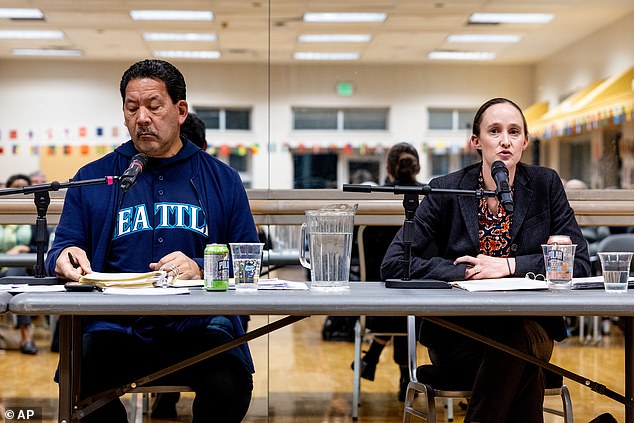
Seattle is on the brink of making history, with the possibility of electing its first democratic socialist mayor by an incredibly slim margin. As the vote count continues to trickle in, the race between incumbent mayor Bruce Harrell and challenger Katie Wilson remains one of the closest in recent memory.
Katie Wilson, a 43-year-old candidate, has managed to narrow the gap between herself and Harrell to just 4,300 votes as of Friday. This is a less than two percent difference, and there are still approximately 50,000 ballots remaining to be counted. The tight race has seen fluctuations in the lead over the past week since the general election on November 4.
Former mayor Gregory Nickels calculated that if Wilson maintains the same percentage of votes from the most recent batch of counted ballots, she could win by a mere 65 votes. "Yeah this will be close," he wrote on Facebook, highlighting the uncertainty surrounding the outcome.
If elected, Wilson would make history as the first democratic socialist mayor of Seattle. Her campaign mirrors the recent victory of democratic socialist Zohran Mamdani in New York City, who won by nine points in the general election. Like Mamdani, Wilson has focused her campaign on increasing affordability in Seattle, a city known for its high cost of living. Another key part of her platform is addressing the city’s severe homelessness crisis.
However, Wilson has faced criticism from opponents who argue that she is privileged and out of touch. Critics point to her regular financial support from her professor parents for childcare expenses. Additionally, they highlight that she dropped out of Oxford University just six weeks before graduation, leaving without debt thanks to her family’s financial backing.
Harrell’s reelection website features a quote from Carolyn Riley-Payne, former Seattle King County NAACP President, who expressed concerns about Wilson’s ability to relate to the challenges of affordability. “It’s hard to trust a candidate running on their challenges with affordability when her family’s wealth shields her from actual consequences and financial stress,” Riley-Payne said.
Wilson and her husband spend $2,200 per month on daycare for their toddler, and another $2,200 to rent their apartment. Despite these figures, Wilson has acknowledged her privileged upbringing, stating that she became aware of it while attending public schools where she had friends without the same means.
She told KUOW that when she moved to Seattle in 2004, she cut herself off from her parents' money and worked a variety of working-class jobs. “Psychologically, it really did something to me,” she said.
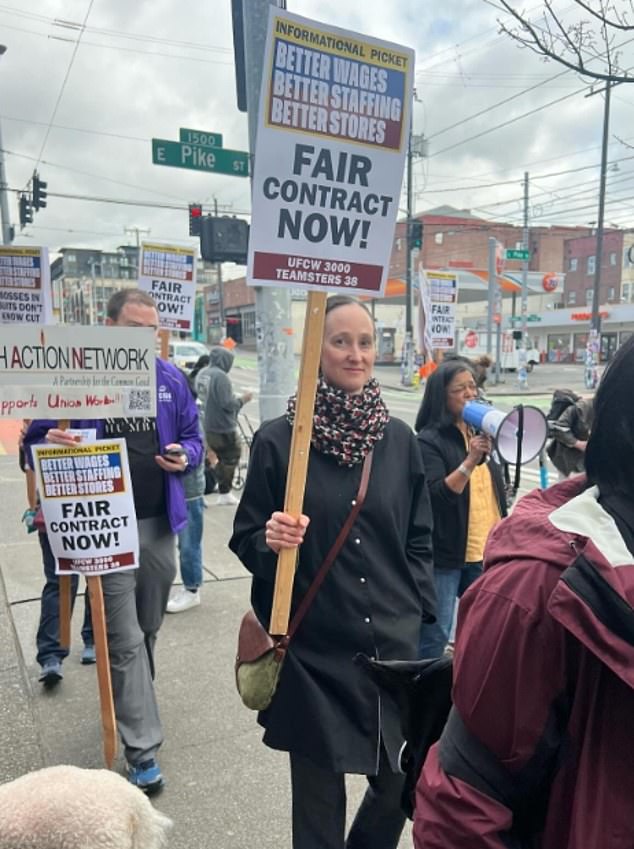
In 2011, Wilson founded the Transit Riders Union, a nonprofit focused on improving public transportation in Seattle and King County. Tax records show she earned close to $73,000 from the nonprofit in 2022 while working 55-hour weeks.
Currently, her husband does not have a paying job, which means the couple’s household income is below what would be considered enough to support themselves and their child in Seattle. That fact is part of the reason Wilson is not ashamed of the financial assistance she receives.
“It just speaks to how expensive and unaffordable it is, right?” she said. “If you're lucky enough to have parents who can pitch in a little bit, that's not something to be embarrassed about.”
A spokesperson for Wilson’s campaign told the Daily Mail: “Families from all different kinds of economic backgrounds support each other in all different kinds of ways. Katie Wilson’s experience—-as a working mom who lives in a one-bedroom apartment with her husband and two-year-old daughter and recently received a small amount of financial support from her middle-class parents to help pay for childcare in one of the most expensive cities in the country while she ran for mayor—is far less of an aberration than that of the incumbent mayor Bruce Harrell, who lives in a 7,000 square foot house and has a net worth in excess of $15 million.”
“Katie’s experience is, if anything, representative of her generation and underscores the need for broad system change to address affordability for working people in our city and nation.”
In August, Wilson won the mayoral primary by 9.5 points. Turnout at the primary this year was slightly lower than the last election in 2021, according to Ballotpedia.
Unofficial King County election results last updated on Friday showed that about 40,000 more registered voters cast their ballots in the general election than in the primary. That represented about 46 percent of the city's registered voters, which is lower than the 2021 turnout of 54.6 percent in the 2021 general election. Every vote in the tight race is thus highly important.
That lower turnout also represents a stark difference with New York City's mayoral election, where 2 million votes were cast—the most by raw number since 1969 and the highest percentage of registered voters to engage in the election since 2001.
If Wilson wins, not only would she be the first democratic socialist mayor of Seattle, she would also be the third woman to earn the position, and the first mother of a toddler to do so.