New Glenn rocket launch delayed by weather in Blue Origin test flight
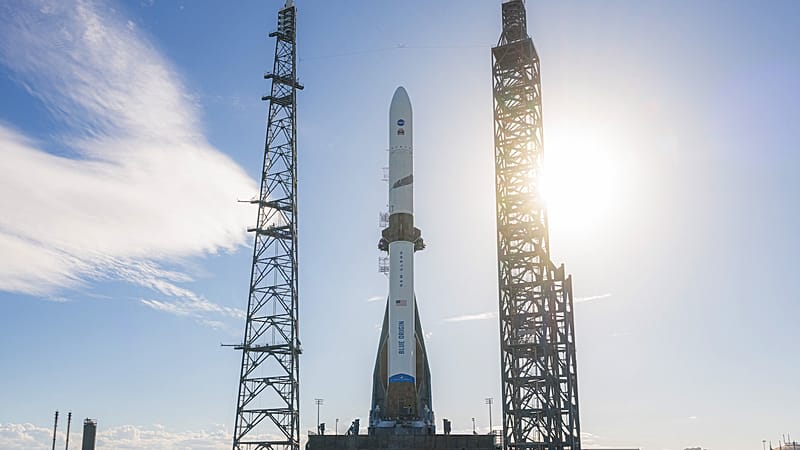
Blue Origin Delays New Glenn Launch Due to Weather Conditions
Blue Origin, the space company founded by Jeff Bezos, has decided to cancel a planned launch of its New Glenn megarocket on Sunday afternoon. The launch has now been rescheduled for Wednesday at the earliest. The company attributed the delay to weather conditions, specifically citing the "cumulus cloud rule" which prohibits rocket launches through clouds that may contain hazardous electrical fields.
“Our next launch attempt is no earlier than Wednesday, November 12, due to forecasted weather and sea state conditions,” Blue Origin stated. The company worked closely with the US Federal Aviation Administration (FAA) to secure a new launch window on Wednesday evening local time, allowing the mission to proceed despite the ongoing US government shutdown, which had previously imposed a ban on commercial rocket launches.
The upcoming mission, designated as “NG-2,” will mark the second flight of the New Glenn rocket and its first commercial flight. This mission is part of NASA’s ESCAPADE mission, which aims to send two identical spacecraft to Mars. These spacecraft will orbit the Red Planet to study its magnetic field and atmosphere dynamics.
In addition to the NASA mission, the New Glenn rocket will also transport Viasat technology to support NASA’s Communications Services Project. This collaboration highlights the rocket's versatility in supporting various scientific and technological objectives.
A Giant, Reusable Rocket Designed for Commercial Use
Named after the first American to orbit Earth, New Glenn is one of the largest rockets ever built, standing over 98 metres tall. It is capable of carrying payloads twice as large as standard five-metre class commercial launch systems. The rocket can transport more than 13 metric tonnes to geostationary transfer orbit and 45 metric tonnes to low Earth orbit.
One of the most notable features of New Glenn is its reusability. The first stage of the rocket is designed for a minimum of 25 flights, making it a cost-effective solution for future missions. Additionally, the rocket uses cleaner fuel: the upper stage is powered by liquid hydrogen, while the first stage uses liquid oxygen and liquefied natural gas. These design choices make New Glenn more sustainable and affordable for a wide range of clients.
Despite these advancements, Blue Origin is still working to demonstrate the practicality of its reusable technology. During the maiden flight of New Glenn on 16 January, the upper stage successfully reached orbit, but the booster was lost before it could land. The company hopes to achieve a successful landing of the booster during this second flight, which would solidify its position as a strong competitor to Elon Musk’s SpaceX.
Future Prospects for New Glenn
With its impressive capabilities and focus on sustainability, New Glenn represents a significant step forward in the commercial space industry. As Blue Origin continues to refine its technology and prove the reliability of its reusable rocket, the company is positioning itself as a key player in the evolving landscape of space exploration.
The upcoming launch is not just a test of engineering prowess but also a demonstration of Blue Origin's commitment to innovation and environmental responsibility. If successful, the mission could open new opportunities for scientific research and commercial ventures in space.
As the countdown continues for the rescheduled launch, all eyes will be on Blue Origin to see if they can deliver on their promises and establish themselves as a leader in the next era of space travel.
