Pressure grows on Belgium to fund Ukraine reparations loan
Political Pressure on Belgium to Support Ukraine's Reparations Loan
Political pressure is increasing on Belgium to lift its reservations and support a bold plan to issue an unprecedented reparations loan for Ukraine, utilizing the frozen Russian assets. The proposal involves a €140 billion loan designed as the primary funding mechanism to meet Ukraine's military and budgetary needs over the next two years. This idea has gained momentum following endorsements from the European Commission and finance ministers, who have recognized it as the most viable option available.
Danish Finance Minister Stephanie Lose, who chaired the meeting in her capacity as rotating presidency, emphasized that the Commission's proposal is the best and most realistic option and should be treated as a matter of highest priority. She stated that efforts would continue to work closely with all member states to explore the best way forward.
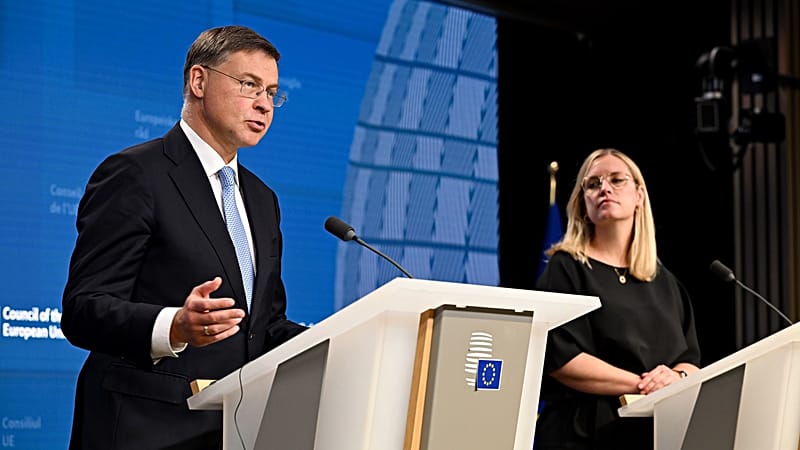
Valdis Dombrovskis, the European Commissioner for the Economy, highlighted that this unprecedented plan would secure Ukraine's funding without placing additional burdens on member states with limited fiscal capacity. He noted that there was wide recognition that this option is the most feasible means of quickly bridging Ukraine's funding gap without imposing substantial fiscal costs on member states.
Dombrovskis also stressed that any assistance provided to Ukraine should primarily be in the form of grants to manage the country's debt burden effectively. If the Russian assets are not used, the alternative would involve raising money on the markets, either jointly by the EU or individually by member states.
"There are other options. We discussed them. But obviously, they come with higher fiscal costs for member states," he said. "So that's just the fact. And we need to be clear about this."
Time Constraints and Urgency
Ukraine will require a fresh injection of foreign aid in the second quarter of 2026. The first quarter should be covered by other G7 allies under an ongoing line of credit. Dombrovskis emphasized the urgency, stating, "We are under time pressure and must move forward in a constructive, pragmatic and cooperative way."
Earlier on Thursday, Ursula von der Leyen described the reparations loan as the "most effective way" to support Ukraine's fight for freedom and raise the costs for Moscow. Ukrainian President Volodymyr Zelenskyy noted that the loan would be a "big-big loss" for Russia. "To freeze money is one thing, but to give it to Ukraine is another," he wrote. Kyiv would only repay the loan if Moscow agreed to pay for war reparations.
Risks and Concerns
Despite the potential benefits, the risks due to inaction are greater than the alternative. Still, Belgium has not indicated it will sign off on the plan soon. As the host of Euroclear, the depository that houses the immobilized Russian assets, Belgium fears it could become the prime target of the Kremlin's retaliation. Belgium and Russia are bound by a Soviet-era investment treaty that allows for arbitration.
Belgian Prime Minister Bart De Wever has demanded the "maximum" legal certainty, including binding guarantees from all member states to ensure the "full mutualisation" of risks and total transparency in listing the Russian assets held in other jurisdictions. Technical talks between Belgium and the European Commission have focused on these issues but have failed to deliver a breakthrough.
"No progress at all so far," a Belgian source familiar with the discussions told Euronews. The same official expressed regret over the Commission's insistence on the reparations loan despite a mandate from leaders to explore other options.
"Zero risk is not realistic, but the risks are still extremely high. It's not certain how this will impact the eurozone," a source close to the Belgian government's thinking said. "We want a legal text for complete burden sharing. We have done our homework."
Ongoing Challenges and Future Outlook
The impasse has raised doubts about whether EU leaders will endorse the reparations loan when they meet again in December for a crunch summit. If the deadline is missed, the bloc might have to resort to an interim solution to prevent Kyiv's default.
Asked about the Belgian concerns, Dombrovskis said the Commission was working "very seriously" to address them, without elaborating further. "Obviously, there needs to be solidarity and those risks need to be shared," he said. "There are always risks associated with action and with containing the aggressor, but the risks of inaction and not containing the aggressor are even greater."
Meanwhile, Paschal Donohoe, the president of the Eurogroup, said the reparation should advance once the "reasonable" demands of the Belgian government are considered and all alternatives explored. "There are strong merits to the reparation loan, but there are also trade-offs," Donohoe told Euronews in an exclusive interview. "We are expecting a formal proposal from the European Commission, and after that, the debate on how to move forward will intensify."
