SG Fintech Firms Prioritize Growth in Hiring Decisions
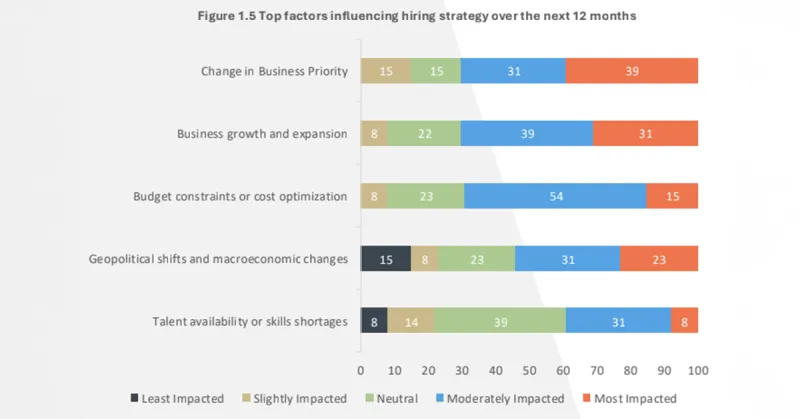
Key Factors Shaping Fintech Hiring Strategies in Singapore
According to a recent report by the Singapore Fintech Association, several factors are expected to influence financial technology (fintech) hiring strategies over the next year. Among these, changes in business priorities and business growth and expansion have emerged as the most significant drivers.
Change in Business Priority: Leading Factor
Change in Business Priority was cited as having the most impact on fintech hiring strategies, with 39% of respondents identifying it as the top factor. This indicates that many fintech companies are re-evaluating their strategic direction, which directly affects their staffing needs.
Additionally, 70% of respondents reported that this factor has a moderate or high impact on their hiring plans. This suggests that a majority of fintech firms are actively adjusting their workforce to align with evolving business goals.
Business Growth and Expansion
Business growth and expansion also played a crucial role, with 70% of respondents indicating that it has a moderate or high impact on their hiring strategies. As fintech companies expand into new markets or scale their operations, they often require additional talent to support these initiatives.
This trend reflects the dynamic nature of the fintech industry, where rapid growth is often accompanied by increased demand for skilled professionals.
Budget Constraints and Cost Optimisation
Budget constraints and cost optimisation were another major concern, with 69% of respondents rating its impact as moderate or high. Notably, 54% of those surveyed indicated that this factor had a moderately impactful effect on their hiring decisions.
This highlights the challenges that fintech companies face in balancing growth ambitions with financial limitations. Many organisations may need to adopt more cost-effective hiring practices or focus on retaining existing talent to manage expenses.
Geopolitical Shifts and Macroeconomic Changes
While geopolitical shifts and macroeconomic changes were identified as factors that could influence hiring strategies, their impact was relatively lower compared to the top three drivers. A combined 54% of respondents reported that these factors would moderately or most significantly affect their strategies.
Despite this, the potential for global events to disrupt business operations and investment remains a concern for the fintech sector. Companies must remain vigilant and adaptable to external economic conditions.
Talent Availability and Skills Shortages
In contrast, talent availability and skills shortages were seen as the least critical driver of hiring strategies. Only 8% of respondents cited this as having the most impact, while 39% rated its influence as moderate or high.
This suggests that while some fintech companies may face challenges in finding qualified candidates, it is not currently the primary concern when planning their workforce needs.
Conclusion
The findings from the Singapore Fintech Association report highlight the evolving landscape of fintech hiring strategies. As businesses navigate changing priorities, growth opportunities, and financial constraints, their approach to talent acquisition will continue to adapt. Understanding these key factors can help fintech companies make informed decisions and stay competitive in a rapidly changing industry.
