"Truth in Climate Action": Nations pledge to combat climate misinformation at UN summit
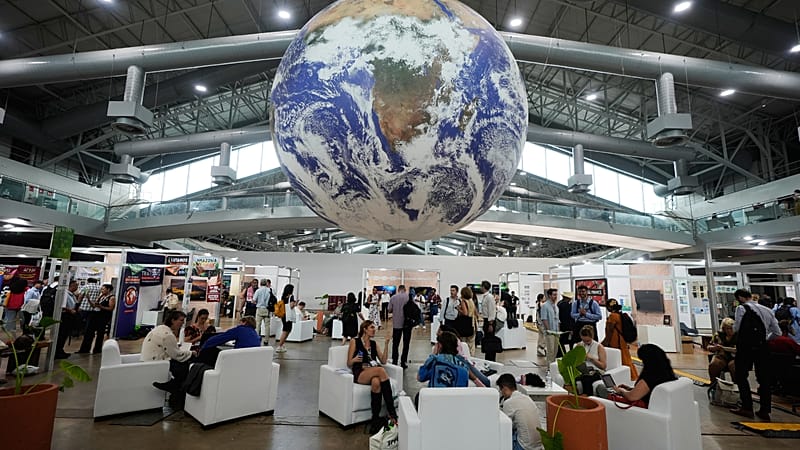
Climate Disinformation and Information Integrity Take Center Stage at COP30
At this year's United Nations climate summit, the issue of climate disinformation and information integrity has been placed on the agenda for the first time. Brazilian President Luiz Inácio Lula da Silva opened COP30 in the Amazonian city of Belem with a strong message to world leaders, urging them to "defeat" climate deniers.
"We live in an era in which obscurantists reject scientific evidence and attack institutions. It is time to deliver yet another defeat to denialism," Lula said. He emphasized that COP30 would be the "COP of truth" in an age marked by "fake news and misrepresentation."
In the lead-up to COP30, UN Secretary-General António Guterres also highlighted the importance of combating climate disinformation. He called for a global effort to address "mis- and disinformation, online harassment, and greenwashing." Guterres stressed that scientists and researchers should never fear telling the truth.
The Rise of Climate Disinformation
Despite widespread public support for climate action, disinformation continues to sow doubt ahead of major climate events like COP30. A report from Climate Action Against Disinformation and the Observatory for Information Integrity revealed a 267% increase in COP-related disinformation between July and September this year. Keywords related to the UN climate summit appeared alongside negative terms such as "failure," "catastrophe," "disaster," and "joke."
On Wednesday, hundreds of civil society organizations, individuals, Indigenous groups, and global leaders signed an open letter calling for national governments to champion a strong, ambitious, and mandatory decision at COP30 to uphold information integrity. Signatories include notable figures such as Christiana Figueres, Laurence Tubiana, and representatives from Climate Action Network International and 350.org.
The letter highlights that the degradation of the information ecosystem is not just a climate crisis but a "multi-faceted global emergency." Recent studies by the International Panel on the Information Environment (IPIE) and the Climate Social Science Network show that organized climate obstruction activities are actively delaying the human response to the crisis, sabotaging international cooperation, and making the Paris Agreement goals unattainable.
Commitments to Combat Disinformation
Nations that have signed the Declaration on Information Integrity on Climate Change have committed to tackling false and misleading information about climate change. The declaration outlines six key commitments, including ensuring accurate climate information while protecting free speech, supporting independent media to report accurately on environmental issues, making evidence-based information accessible to everyone, and building capacity to identify threats to information integrity.
The declaration also calls on the private sector to commit to integrity of information on climate change in their business practices and ensure transparent, human rights-responsible advertising practices. It concludes by reaffirming the shared responsibility of nations to empower societies with the knowledge and information needed to act urgently and decisively in the face of the climate crisis.
So far, the declaration has been signed by 12 countries: Belgium, Brazil, Canada, Chile, Denmark, Finland, France, Germany, the Netherlands, Spain, Sweden, and Uruguay.
The Global Initiative for Information Integrity on Climate Change
The Global Initiative for Information Integrity on Climate Change is a partnership between the Brazilian government, the UN, and UNESCO. It aims to combat climate disinformation and was announced at the G20 Leaders Summit in Rio de Janeiro in November 2024.
"Without access to reliable information about climate disruption, we can never hope to overcome it," said UNESCO’s Director-General Audrey Azoulay at its launch. The initiative seeks to support journalists and researchers investigating climate issues, often at great personal risk, and fight the rampant climate-related disinformation on social media.
The initiative is backed by member countries such as Brazil, Chile, Denmark, France, Morocco, Spain, Sweden, the United Kingdom, and Uruguay. Four new members—Belgium, Canada, Finland, and Germany—have recently joined, bringing the total number of state members to 13.
