UK's nuclear push: Rolls-Royce ignites reactor revival
The Struggle for British Industrial Sovereignty
American economic imperialism has reached a concerning level, with its influence extending into sectors that were once considered the backbone of British industry. The automotive, pharmaceutical, and steel industries have all suffered under the policies of Donald Trump’s mercantilism, which prioritized protectionist measures over global cooperation.
While some may question the impartiality of the BBC, especially in its coverage of the Middle East, it is difficult not to feel sympathy for the broadcaster as it faces attempts to undermine it through legal threats. This highlights the broader issue of foreign interference in domestic affairs, particularly when it comes to media and industrial policy.
A Controversial Contract Decision
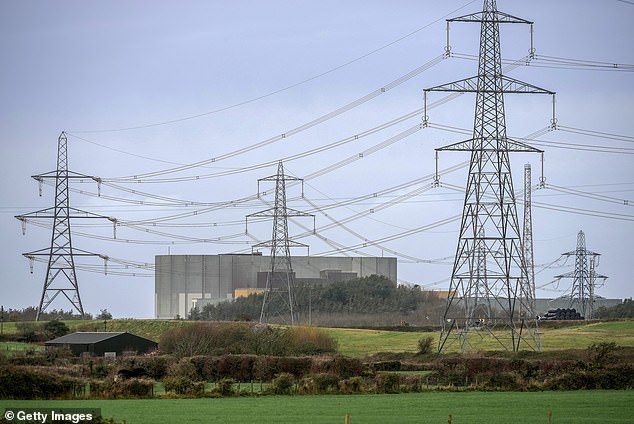
The recent decision to award Rolls-Royce the contract to build the UK’s first generation of small modular reactors (SMRs) at Wylfa in Anglesey has sparked controversy. US Ambassador to the Court of St James’s, Warren Stephens, has expressed his concern that the contract should have gone to Westinghouse instead. However, this complaint overlooks the fact that Rolls-Royce has been a pioneer in SMR technology, drawing on its experience with nuclear submarine power systems.
It has been nearly a decade since Rolls-Royce first introduced its SMR design, and the project has received significant support from the UK government, including funding for research and development. Despite these efforts, delays within Whitehall, which insisted on a global competition for SMRs, caused setbacks in the approval and licensing process. These bureaucratic hurdles allowed companies like Japan’s Hitachi and Westinghouse to catch up.
Historical Context and Strategic Decisions
It is also worth noting that while the UK government hesitated, the Czech Republic was the first to place an order for Rolls-Royce’s SMRs. This highlights the importance of timely decision-making in the global race for nuclear technology.
Interestingly, Westinghouse was once under the control of British Nuclear Fuels until 2006, when it was sold to Japan’s Toshiba for £4 billion. This sale, along with other similar transactions during the Blair-Brown era, has been criticized as a loss of national assets.
Ed Miliband has faced criticism for his approach to climate change, but his support for Rolls-Royce’s nuclear technology has been a positive move. If there are no further delays, the Wylfa project could serve as a model for future international sales.
Corporate Transformation and Financial Growth
Under the leadership of chief executive ‘Turbo’ Tufan Erginbilgic, Rolls-Royce has undergone a remarkable transformation. The company recently confirmed its full-year profits forecast of between £3.1 billion and £3.2 billion, representing a 24% increase. This growth is driven by increased flying hours for its wide-bodied jet engines, as well as rising defense spending, including the sale of Typhoon jets powered by Rolls turbines to Turkey and submarine orders.
The prospects for SMRs are also contributing to the company's success, with its shares doubling this year and its valuation exceeding £90 billion. Imagine what Erginbilgic’s dynamic leadership could achieve if applied to the UK’s struggling NHS, where £29 billion in taxpayer funds is being wasted.
Economic Data and Policy Challenges
The current economic landscape presents several challenges. The Office for National Statistics has announced plans to reduce the frequency of data releases, a move that may be beneficial given the overwhelming amount of information currently available. There is a case for reverting to quarterly GDP reports rather than monthly ones, especially when the data is often rendered meaningless due to external factors such as the cyber shutdown at Jaguar Land Rover.
Looking ahead, the Budget arithmetic will require forecasts that extend five years into the future, highlighting the need for more accurate and reliable data.
Burberry’s Revival and Future Prospects
Joshua Schulman’s arrival at Burberry has brought a renewed sense of direction to the luxury brand. His focus on classic products such as outerwear, scarves, and trench coats has helped restore the company’s reputation. By emphasizing authenticity and adopting sensible pricing strategies, he has revitalized the share price, even sparking renewed interest in previously underperforming China revenues.
An end to HMRC’s controversial tourist tax would be the final touch in this revival, offering further relief to both businesses and consumers.
